
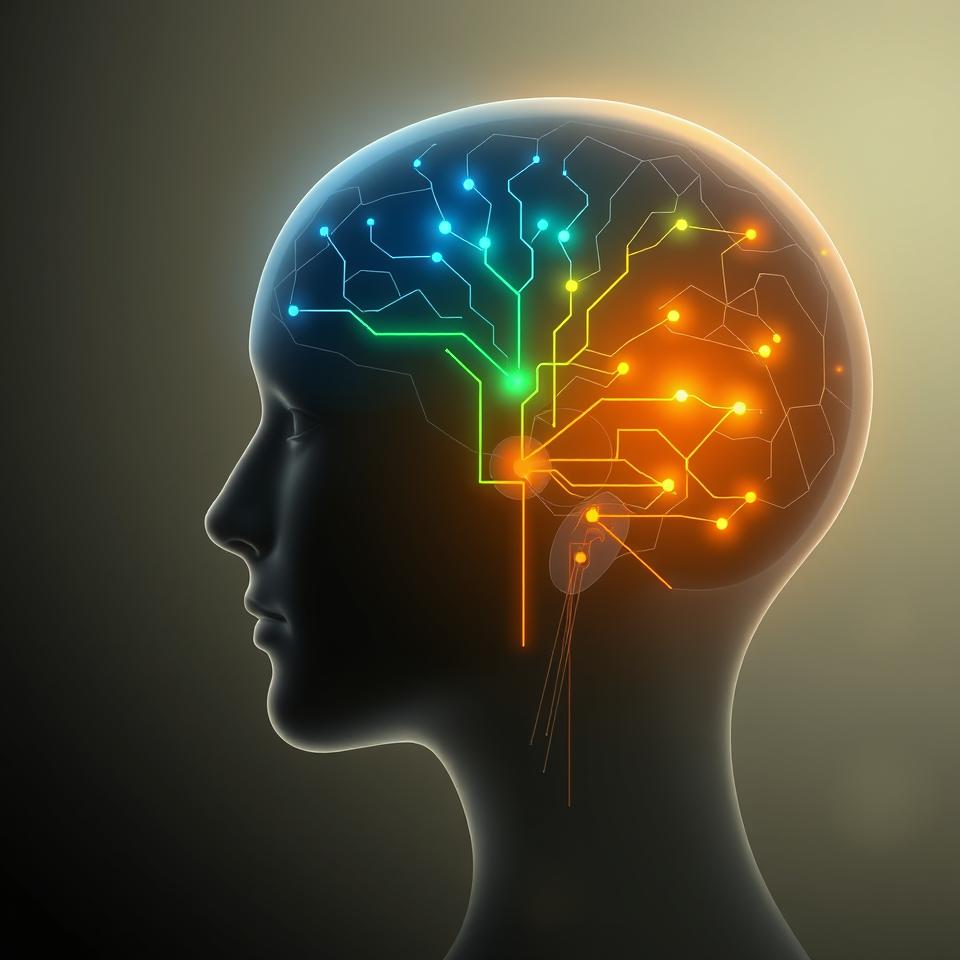
- Personality is not fixed: Deeply ingrained habits and behaviours can be changed through awareness, understanding, and practice.
- The three faculties of change: Transformation is achieved by understanding the interplay between the mind (thoughts), the intellect (reasoning and choice), and sanskars (deeply rooted habits).
- The power of a pause: By using meditation to train the intellect, we can create space between impulse and action, allowing us to choose our responses and reshape our character.

Personality change is possible. Over the years, many of us lose hope that we can ever fix some of our less attractive habits. Repeated behaviours like becoming impatient, fearful, or critical can make these tendencies feel so familiar that we begin to identify them as “the way I am.” Yet our personality is not a prison. The very fact that patterns are formed through repeated thoughts, feelings, and actions means that new patterns can also be created. With awareness, understanding, and practice, old tendencies can gradually weaken, and new mannerisms emerge. Change begins when we stop saying, “This is who I am,” and begin asking, “Who do I choose to become?”
The Brahma Kumaris’ understanding of the mind, intellect, and sanskars offers an interesting way of understanding how this transformation takes place. While modern psychology does not use these three terms in precisely the same way, there are parallels.
Mind
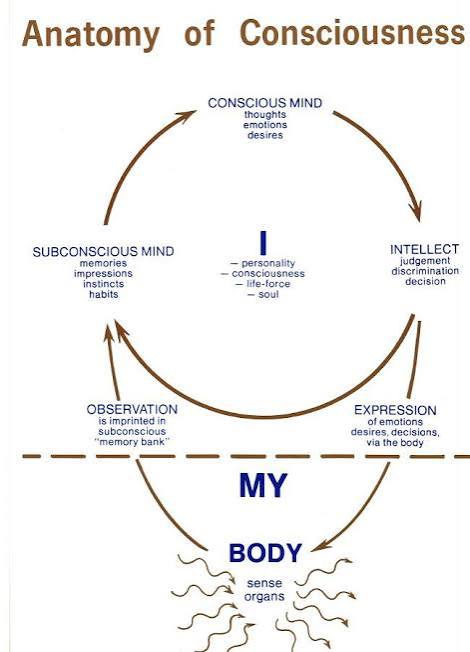
The mind is understood in Raja Yoga as the faculty through which thoughts arise. It is constantly active, creating images, ideas, memories, and interpretations. One thought can lead to another: Why did she say that? What if something goes wrong? The mind can travel into the past through memories or into the future through imagination. Thoughts can arise automatically in response to something we see, feel, or remember. But thoughts are not facts. They are a momentary response to an instant in time. I am not my thoughts. It is a resource that I must manage.
Intellect
The intellect is the faculty that assesses, reasons, and makes decisions. It determines which thoughts deserve attention and which should be discarded. The intellect must be consciously engaged to strengthen and sharpen its skills. A person who does not exercise internal determination using their intellect becomes a pliable product of their environment who reacts rather than responds. The worth of a person depends on how they use the power of their intellect.

Psychology has no single faculty that corresponds exactly to the BK concept of intellect. However, there are related functions like reasoning, decision-making, and self-regulation. Someone may experience an angry thought but pauses before acting on it. The ability to create that space between an impulse and an action is important for self-transformation.
Sanskars
These are the deep impressions or memories accumulated within the soul through repeated thoughts and actions. A person who regularly practises patience gradually develops a tendency towards patience, while someone who repeatedly expresses anger will come to accept anger as a normal character trait.
Psychology
The parallel in psychology is of learning and habit formation. Repeated behaviour can become increasingly automatic. Neural pathways and behavioural patterns are influenced by repetition, and habits can become responses that require no conscious deliberation. Psychology may explain this as conditioning, while Raja Yoga describes these deeper imprints as sanskars.
The relationship can therefore be pictured as a cycle: Thought → choice → action → repetition → sanskar → tendency → thought.
Suppose someone is criticised at work. The mind immediately produces the thought, “He is trying to make me look bad.” The intellect may accept that interpretation, and the person responds angrily. If this happens repeatedly, then anger kicks in as a standardised response before there is time for conscious consideration of what has actually happened.

This cycle can also move in a positive direction. A person can listen and respond to the same criticism in a way that aligns with core values. Repeated often enough, patience, humility, and openness will blossom. This is using the intellect and not allowing thoughts to flow unchecked.
Meditation
Meditation is an important exercise to shape up the intellect. It is mental training for the mind to learn how to pause and recognise. It provides an opportunity to screen our thoughts. In soul consciousness, the practitioner observes the activity of the mind and uses the intellect to choose elevated thoughts. With practice, these thoughts will gradually migrate into feelings, attitudes, and behaviour.
We are not permanently imprisoned by our existing habits. Perhaps the greatest freedom is not the ability to prevent a thought from entering the mind, but the ability to choose which thoughts to entertain, which feelings to nurture, and which qualities we will allow to become part of who we are.
Vijai Sadal is a student of the Brahma Kumaris Raja Yoga Meditation Centre. He can be reached at vijai@pepesmkt.com