
In Brief
- A New Perspective on Peace: At a recent symposium marking the UN International Day of Peace, young people shared profound insights, redefining peace as the personal strength to walk away from conflict and negative influences.
- The Power of Example: The youths highlighted the devastating impact of social media and adult behaviour on their choices, calling for an end to gang violence so they can live freely.
- Constructive Solutions: To protect vulnerable adolescents, the article advocates for a shift towards structured activities—such as sport and the arts—combined with mindfulness and character-building programmes to help youths discover their true potential.

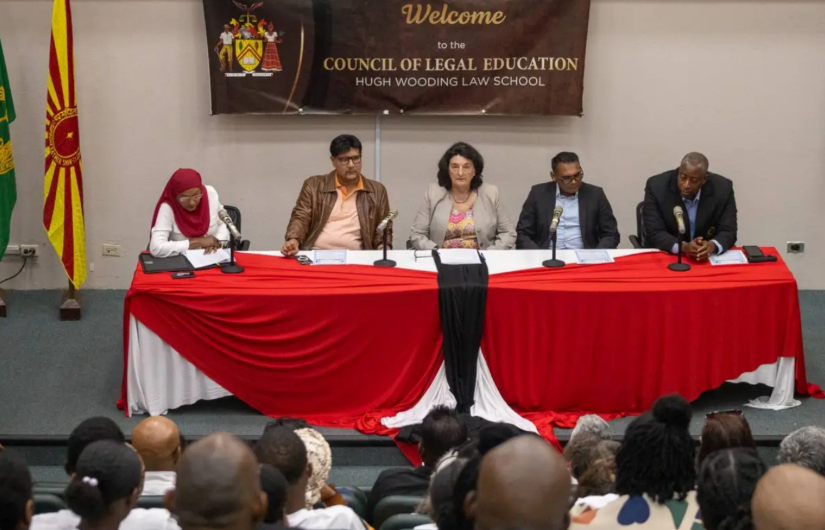
Last weekend I attended a symposium convened by Sister Kay Narinesingh, of the Raja Yoga Prison Ministries, at the Hugh Wooding Law School, to celebrate the United Nations International Day of Peace. Her focus was on the vulnerable young people of our society. A young man read an essay he had written, and his words caused me to pause and reflect on how differently young people may experience the world around us.
He said, “To me, peace means knowing when to walk away as I did not always understand how bad decisions and wrong company could affect my life.”
I was taken aback. Peace is normally spoken about as countries avoiding war or communities being free from violence. Yet, for a young person, peace can begin with the ability to resist retaliation or making right decisions when emotions are running high.
“As youths we feel pressure to prove ourselves,” he continued. “From a young age I struggled with anger, was rebellious and did not listen to good advice.”

His words remind us that juveniles do not necessarily enter troubled situations because they want conflict. Sometimes they are responding to pressure, the desire for acceptance, the need to establish an identity or the fear of appearing weak. Walking away may be interpreted as cowardice, while retaliation is seen as a demonstration of power. Teaching young people that genuine strength can also mean self-control and the courage to make a different choice is therefore an important part of peace building.
Among the audience, I had the opportunity to speak with another young lady. She explained, “To me peace is a truce among all gangs. When gang activities stop people could walk freely without having to look over their shoulders. We are influenced by crime and violence on social media and watching siblings and parents.”
Her observation was revealing. Children and adolescents learn not only from what adults tell them but also from what they see adults doing. Values are communicated through example. If teenagers repeatedly see aggression, disrespect or criminality presented as normal, these behaviours gradually become part of their lifestyle.
I then shifted the conversation to possible solutions and heard from a few more of the young crowd. Sport was a unanimous response. “There should be more people willing to encourage us to participate in football, rugby, basketball and music and art programmes.”
Their answer was simply stated but is perhaps more profound than it first appears. Sport and the arts can provide structure, discipline, friendship and a sense of achievement. They can give the next generation somewhere to go, something meaningful to do and people who encourage them. A football field, basketball court or music room can become an alternative environment to the street.
My overall experience with these juniors was positive. They were engaging, responsive and willing to discuss difficult issues. Still, they are dealing with so many pressures. I am also distracted by social media, but the effect on the young is far more devastating than I had realised.
As parents, educators and members of society, we must be vigilant and proactive in supporting adolescents to safely manage their online lives. Digital media exposes young people to dangers—subtle and obvious—that they do not yet have the maturity to comprehend.
While discussing solutions, I noted that each one spoke in the third person. They spoke about what “people” should do, what “adults” should provide and what “society” should change. I accept this, because they are young and need adults to create supportive environments around them. But perhaps the next stage is to help them discover their own capacity to become part of the solution.

Exposure to meditation, contemplation and the study of what constitutes healthy, wholesome behaviour would be a step in the right direction. Adults could support young people through sporting and artistic programmes, as these were clearly among their preferences. But we can also nurture qualities such as honesty, tolerance and non-violence.
Ms Narinesingh provides an inspiring example. For the last 18 years she has been running an art-training class for prisoners. She begins with meditation and includes the practice of patience, peace and kindness throughout the sessions. She also persuaded professional assistance, and the art pieces are now sold, making the programme self-sustaining.
Perhaps there is a lesson here for our approach to vulnerable youth. In addition to the focus on what young people must not do, we should also help them discover what they can become.
Vijai Sadal is a student of the Brahma Kumaris Raja Yoga Meditation Centre. He can be reached at vijai@pepesmkt.com















This is such a thoughtful piece. Beautiful insights