
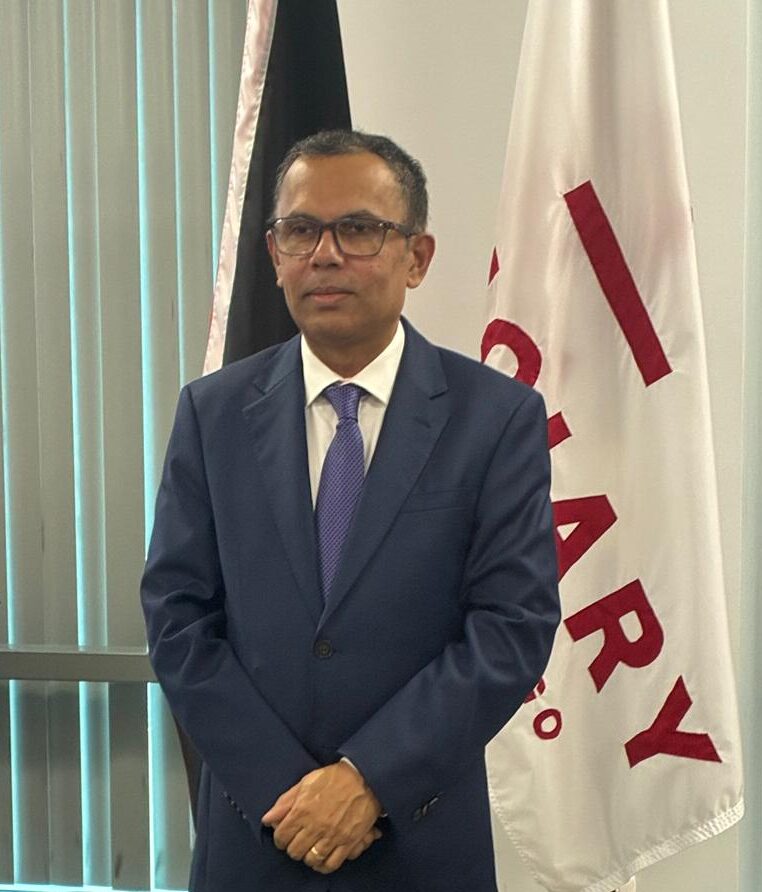
- The Question: Speaking to the media in Port of Spain on Thursday, Chief Justice Ronnie Boodoosingh was asked by AZP News what frameworks exist to prevent the appearance of bias when judges have spouses or close relatives involved in politics or state legal work.
- The Mechanisms: Boodoosingh noted that in a small country, two professionals often share a household, and the Judiciary relies on established recusal guidelines, judicial oaths, scenario-based training and formal applications by litigants to handle potential conflicts of interest, including pecuniary interests.
- Case-by-Case Approach: The Chief Justice said such situations are not a ‘really significant issue’ in the jurisdiction and must be addressed on a case-by-case basis, adding that while judicial officers cannot account for who they married, ‘they can account for their conduct.’
By Prior Beharry
Judicial officers are guided by established recusal rules, scenario training and their oaths of office to manage potential conflicts of interest—including pecuniary interests or the appearance of political bias—Chief Justice Ronnie Boodoosingh said on Thursday.
Boodoosingh made the remarks while responding to a question from AZP News during a media interview at the Judiciary’s training room at Tower D of the International Waterfront Centre in Port of Spain.

AZP News asked the Chief Justice what institutional frameworks, conflict-screening protocols or updated guidelines the Judiciary employs—beyond relying solely on a judge’s own discretion—to guarantee political neutrality when judicial officers have immediate family members who hold prominent political office, are heavily entrenched in party politics, or routinely receive major state legal briefs.
In response, Boodoosingh noted that given the size of Trinidad and Tobago, it is not uncommon for judicial officers or their spouses to have professional or past political connections.
“Some people might have had a political past. We have judicial officers who have had a political past. And we live in a relatively small country. We like to think we are very big, but we are a relatively small country,” Boodoosingh said.
He said, “So you might have two professionals in a household. My wife is a lawyer as well. You would have judicial officers whose spouse is a lawyer as well. Or they might be involved in many different things.”
To address potential conflicts, Boodoosingh explained that the Judiciary has formal guidelines on recusal, including general rules that a judge must follow if there is a pecuniary (financial) interest or an appearance of bias.
“The parties can ask for a particular judge or judicial officer to recuse. So let’s say you have a matter before a particular judicial officer. If you have a concern that that person’s spouse also might be involved in political activity, or have been also, then there are applications which are part of the judicial process which can be made. And the judicial officer can, of his or her own discretion, as you say, make a decision,” he said.
Training and judicial oaths
Beyond formal recusal applications, the Chief Justice pointed out that judicial officers undergo specialised training to navigate sensitive scenarios and are bound by their judicial oath to remain impartial.
“We also do training for judicial officers on political issues, on dealing with scenarios: when would you recuse? When do you not recuse?” Boodoosingh said.
“But judicial officers also, when they take their oath, regardless of their past, are taking an oath that they will look at the cases and try to bring to bear their knowledge and experience, and be aware of bias. We warn ourselves; we sometimes test things for ourselves as individuals as well. So those are all complex mechanisms.”

Dealt with ‘case by case’
Boodoosingh added that the vast majority of matters coming before the courts—such as those in the family or criminal divisions—carry “no political flavour at all.”
“For example, you might have a judicial officer who is in the family court. The kinds of cases which might involve political questions and so on may not come to the family court,” he explained.
Boodoosingh said, “But where there is a political case, or a politician has been charged, or someone connected with politics has been charged, if the judicial officer happens to be somebody who has had a history of political activity, or their family or spouse or so, then the parties might make appropriate applications and so on.”
He said such matters must be addressed on a case-by-case basis. He said he did not believe political conflicts of interest were a widespread problem on the local bench.
“I don’t think that that is a really significant issue in our jurisdiction,” Boodoosingh said.
He said, “People, they can’t account for who they married however many years ago, or who their partners are and so on. But they can account for their conduct. And in an appropriate case, one expects that judicial officers will make the right decisions.”