
In Brief
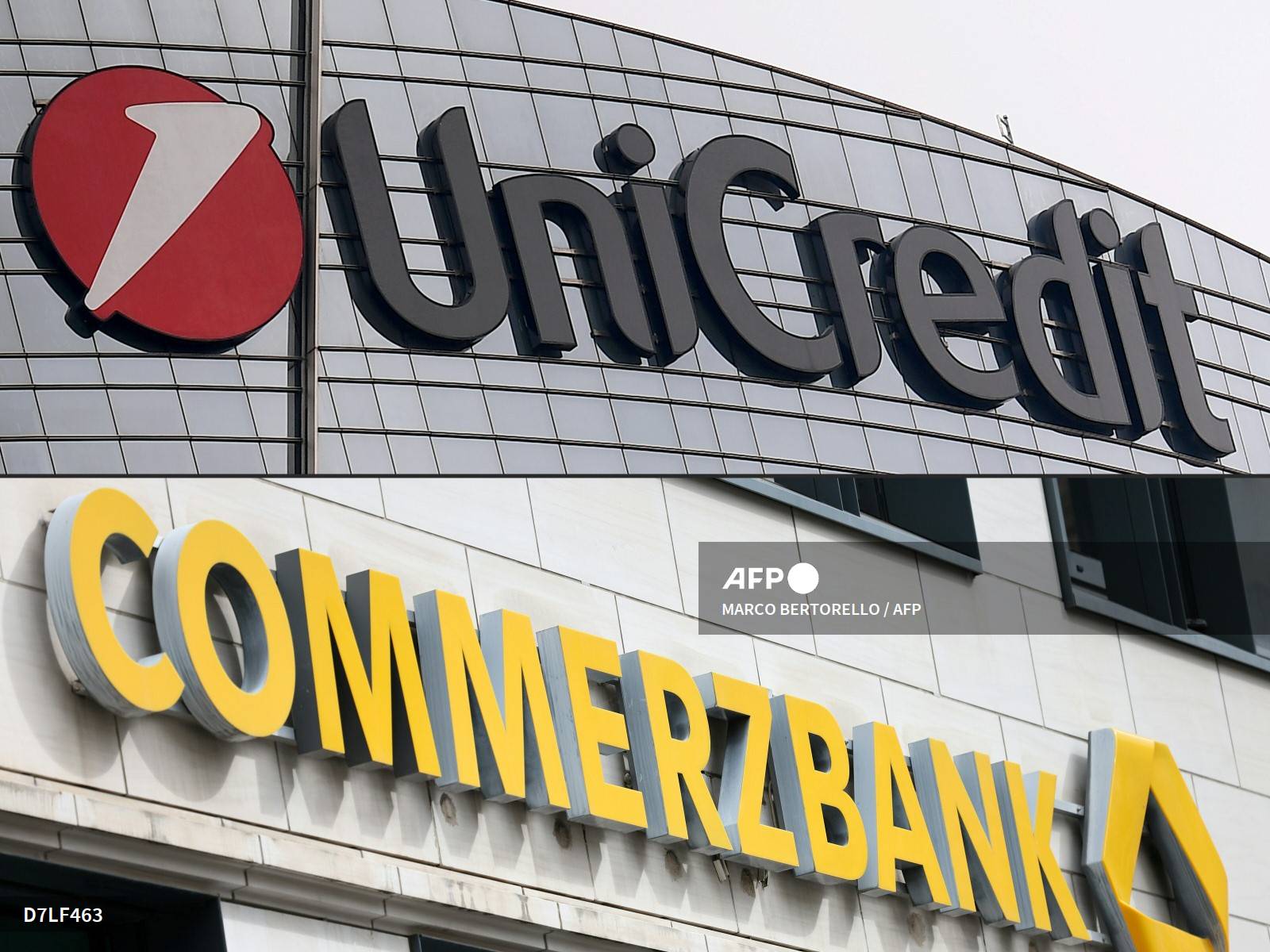
- The Deal: The European Commission has officially approved Italian bank UniCredit’s hostile takeover of German lender Commerzbank.
- The Strategy: Brussels hopes the cross-border merger will help create ‘European champions’ capable of competing with major US banks.
- No Monopoly Fears: Regulators concluded that the combined entity would hold only a ‘moderate’ market share in Germany and would not harm small and medium-sized businesses.
- Shifting Stance: Whilst the two-year pursuit initially faced fierce resistance in Germany, Berlin softened its opposition earlier this year.
BRUSSELS, Belgium (AFP) – The EU on Monday approved Italian bank UniCredit’s takeover of Germany’s Commerzbank as Europe seeks to reinforce the bloc’s banking sector.
With the acquisition of Commerzbank, UniCredit plans to cement its status as a European heavyweight—a goal shared by the European Union, which believes better integration of the bloc’s banking sector will help it keep up with US lenders and boost its competitiveness.
The approval “is a good example of the kind of cross-border merger that can deliver positive scaling up of EU banks, improve their efficiency, and help them better compete internationally,” EU competition chief Teresa Ribera said.

The European Commission, the EU’s powerful competition regulator, approved the acquisition after determining the deal would not raise competition concerns.
“We want stronger European banks, and we want to achieve this whilst safeguarding competition and protecting consumers,” Ribera said.
The EU this year announced plans to overhaul its rulebook on company mergers as Brussels seeks to forge what it calls “European champions.”
However, Monday’s decision “is not a green light for every single merger in the banking sector,” Ribera told reporters in Brussels.
“We will always look at every operation case by case, but it shows we support companies increasing scale when this does not create competition concerns,” she added.
The European Central Bank had already approved UniCredit’s hostile takeover. The Italian lender has pursued Commerzbank for the past two years, raising alarm in Germany, where Commerzbank is a key financing source for small and medium-sized industrial companies.
Ribera said the Commission carefully assessed whether “this consolidation may introduce limits to the small and medium-sized companies in Germany, and that is not the case.”
‘Good news’
Despite initial fierce resistance from Berlin and the German lender, UniCredit had built up a stake of nearly 50 per cent in Commerzbank.
Berlin significantly shifted its stance earlier this year, with Chancellor Friedrich Merz saying his government did not want to prevent the merger.
The EU examined how the takeover would affect banking services in Germany, since UniCredit already has a German subsidiary, HypoVereinsbank, whose activities overlap with those of Commerzbank. However, the Commission concluded that the two banks together would still hold a “moderate” market share for banking services in the country.

Italian Foreign Minister Antonio Tajani welcomed the decision as “good news.”
“Developing the single market is a step in the right direction. It is a Europe that must also look to the future—towards a banking union. It is a Europe that fosters the growth of its own economy,” Tajani said, as quoted in Italian media.
Speaking during an event in Frankfurt, Commerzbank CEO Bettina Orlopp said the decision came as “no surprise.”
“What does this mean for us? For the time being, nothing. We are here for our clients, and that won’t change in the future,” Orlopp said.