

AZP News Commentary
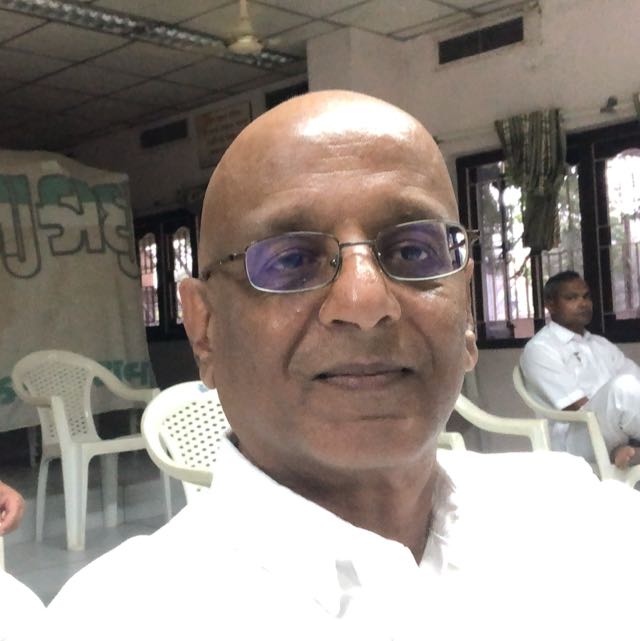
AT one time in my career, I worked as a personnel manager in a medium-sized company. As I was already a meditator, I decided that I would not react immediately to reports about employees. Instead, I waited a few days for my emotions to calm down.
Then I would take another few days to investigate, review the company’s policies and clarify in my own mind the purpose, objectives and language to be used. As a result, when I eventually sat down with the employee, to have a difficult conversation, I was calm and confident. There was never a shouting match.
In a world that moves quickly and demands immediate responses, patience has become a powerful virtue. We are encouraged to react instantly, solve problems quickly, and expect results without delay. Yet patience remains one of the most important qualities for personal growth, relationships, and spiritual development. Patience is not merely the ability to wait; it is the ability to remain calm, understanding, and steady while waiting. It prevents unnecessary reactions and allows people space to be.

Slowdown
Patience begins with the understanding that life is constantly changing. Situations that appear difficult today may transform tomorrow. Problems that seem permanent often dissolve with time. Instead of rushing into anger, fear, or frustration, patience allows us to slowdown, observe, and trust the process of life.
It’s also essential in relationships. Humans grow and change at different speeds. When we expect others to immediately meet our expectations, aggression arises. Patience allows individuals the leeway to learn, mature, and discover their own understanding without nagging corrections or unsolicited opinions.
Never accept gifts of anger
Once, a disciple sought guidance from the Buddha about dealing with people who insulted him. The Buddha asked the disciple, “If someone offers you a gift and you do not accept it, to whom does the gift belong?” The disciple replied, “It remains with the person who offered it.” The Buddha then explained that anger and insults are gifts that he never accepts. Patience allows us to hold our peace so we don’t need to react.
Modern science supports the value of patience. Psychologists studying emotional regulation have found that people who pause before reacting tend to make better decisions and experience lower stress levels. Patience gives the brain time to move from the emotional centers to the reasoning centers. Instead of reacting impulsively, we respond thoughtfully.
Marshmallow test
One famous scientific study that illustrates patience is the “Marshmallow Test,” conducted by psychologist Walter Mischel at Stanford University. In the experiment, children were offered a marshmallow and told they could eat it immediately or wait for a period of time and receive two marshmallows instead. In later follow-up studies, researchers found that the children who were able to wait tended to develop better life outcomes, including stronger academic performance and improved self-control. While the study has been refined and debated over the years, it highlights the importance of patience and delayed gratification.
The battlefield of life
In spiritual practices, patience is pivotal. The warrior Arjuna, in the Bhagavad Gita, at a crucial moment, while in action on the battlefield, becomes overwhelmed and emotionally distress. He expressed the wish to withdraw, but his mentor, Krishna, encourages him to maintain strength of mind and perform his duty with calmness and detachment. This is patience in action, holding firm, while life’s drama unfolds.
Don’t Rush the ScriptThe Brahma Kumaris often describe life as a great drama in which every scene unfolds at its own moment. Just as actors in a play cannot rush the script, human beings cannot force the timing of events. Patience allows us to remain stable and positive while the next scene emerges. Instead of dissatisfaction, there is trust in the process of time.

Patience also protects our inner peace. Reacting quickly to every situation drains emotional energy. When we stop, breathe, and observe, we preserve our tranquility. Over time, patience becomes a form of strength. It allows us to respond wisely rather than impulsively.
Active Calmness
In the end, patience is not passive waiting. It is active calmness. It is the quiet confidence that change will come, that people will grow, and that life unfolds according to its own deeper rhythm. Patience allows us to give others space, give ourselves understanding, and give time the opportunity to do its work.
Vijai Sadal is a student of the Brahma Kumaris Raja Yoga Meditation Centre. He can be reached at vijai@pepesmkt.com