
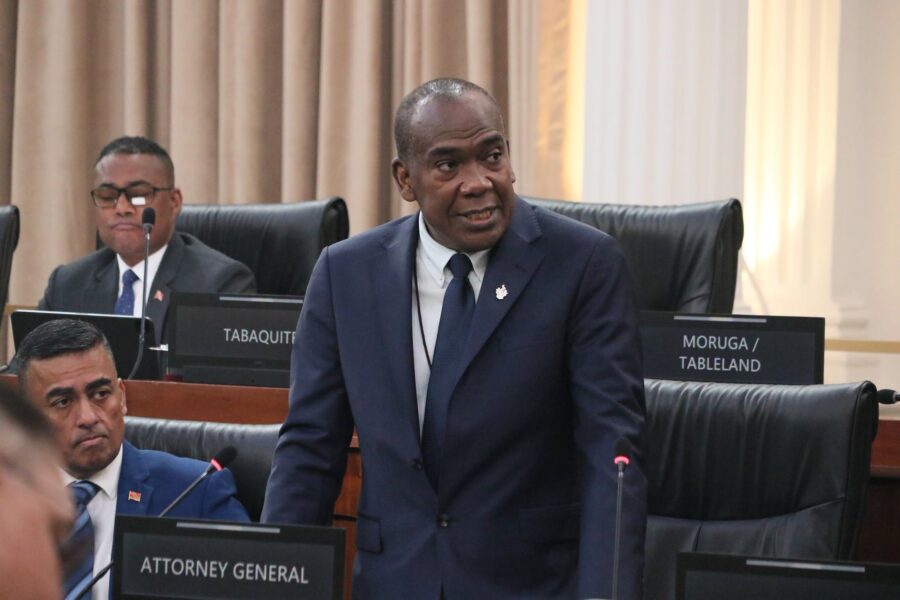
Caption: John Jeremie. Photo: T&T Parliament
In Brief
- Legislation Passed: The House of Representatives passed the Special Operations Bill, 2026, by a simple majority after a marathon 13-hour debate, sending the legislation to the Senate.
- Expanded Powers: Replacing the previous ZOSO legislation, the Bill establishes seven policing districts and allows specific locations to be declared ‘closed areas,’ authorising curfews, cordons, and warrantless searches.
- Constitutional Clash: Opposition MP Keith Scotland heavily criticised the Bill for allegedly infringing fundamental rights without a three-fifths majority, while Attorney General John Jeremie defended the measures as a proportionate response that does not equate to a ‘police state.’
(CMC) – The House of Representatives has passed the Special Operations Bill, 2026, to give law enforcement additional powers to tackle violent crime in designated areas.
The Bill was approved shortly after midnight, following more than 13 hours of debate in the House on Friday.

It replaces the previous Zones of Special Operations (ZOSO) legislation and establishes seven policing districts across the country. The Bill now goes to the Senate.
Under the legislation, specific locations within those districts may be declared “closed areas” for limited periods, allowing authorities to impose measures including curfews, cordons, checkpoints, road closures, and restrictions on entry and exit. The legislation also provides for searches without a warrant in specified circumstances.
Wrapping up the debate, Attorney General John Jeremie said the Government was not promising that the legislation would eliminate crime but would regard it as successful if it contributed to a sustained reduction in violent criminal activity.
“A continuing reduction in the levels of violent criminal activity in our country is what we seek,” Jeremie said.
He said the ultimate objective was a return to peace, while acknowledging that no legislation could provide a perfect solution to crime.
Jeremie also defended the constitutionality of the measure, pointing to parliamentary scrutiny, judicial oversight, and a two-year sunset clause as safeguards.

The Bill does not expressly invoke Sections 4 and 5 of the Constitution or seek passage under Section 13, which would have required a three-fifths majority. It was passed by a simple majority.
That issue was strongly challenged by Opposition MP for Port-of-Spain South, Senior Counsel Keith Scotland, who argued that the legislation infringes fundamental rights and should have been subject to the constitutional requirements for legislation affecting those rights.
Scotland said the Opposition supports stronger policing, intelligence-led operations, and efforts to dismantle criminal organisations, but argued that existing laws, including the Offences Against the Person Act, Anti-Gang Act, and Firearms Act, already give authorities powers to address criminal activity.
He also criticised the level of executive discretion under the legislation, particularly in relation to curfews, cordons, and warrantless searches.
Jeremie rejected those concerns, maintaining that the measures were proportionate to the threat posed by violent crime.
“There is a legitimate object being pursued, we say, by proportionate measures,” he said.
He also rejected the suggestion that the creation of seven policing districts would move the country towards a police state.
“The legislation does establish police districts. But police districts don’t equate to a police state,” Jeremie said.
Under the Bill, the President may declare closed areas and curfews by Order following an application from the Minister of Homeland Security, once the statutory requirements are met.
Jeremie said the President’s discretion under the legislation is circumscribed and maintained that the powers provided by the Bill are executive in nature.