
In Brief
- Energy Sector Paradox: Despite Brent crude trading above US$100 a barrel, Trinidad and Tobago’s local production continues to decline, leading to gas shortages and severe plant closures at Point Lisas.
- Budget Expectations: All eyes are on Monday’s 2026/2027 budget. The Energy Chamber is lobbying for tax reforms and capital allowances to stimulate the sector ahead of new gas projects coming online in 2027.
- Global and Local Markets: Global equities saw gains in the US and Japan, while Europe lagged. Locally, the TTSE Composite fell by 1.08% ahead of the budget.
- Bond Market Pressures: The T&T USD bond curve remains steep. The 2038 global bond is trading at a significant discount due to high US Treasury yields, inflation risks, and local credit concerns.

Trinidad and Tobago enters budget week with a paradox: oil prices are high, but output keeps falling. Brent closed near US$104.72 a barrel on Middle East supply constraints, and the US Energy Information Administration (EIA) expects about US$105 in the fourth quarter before easing to roughly US$84 in 2027.
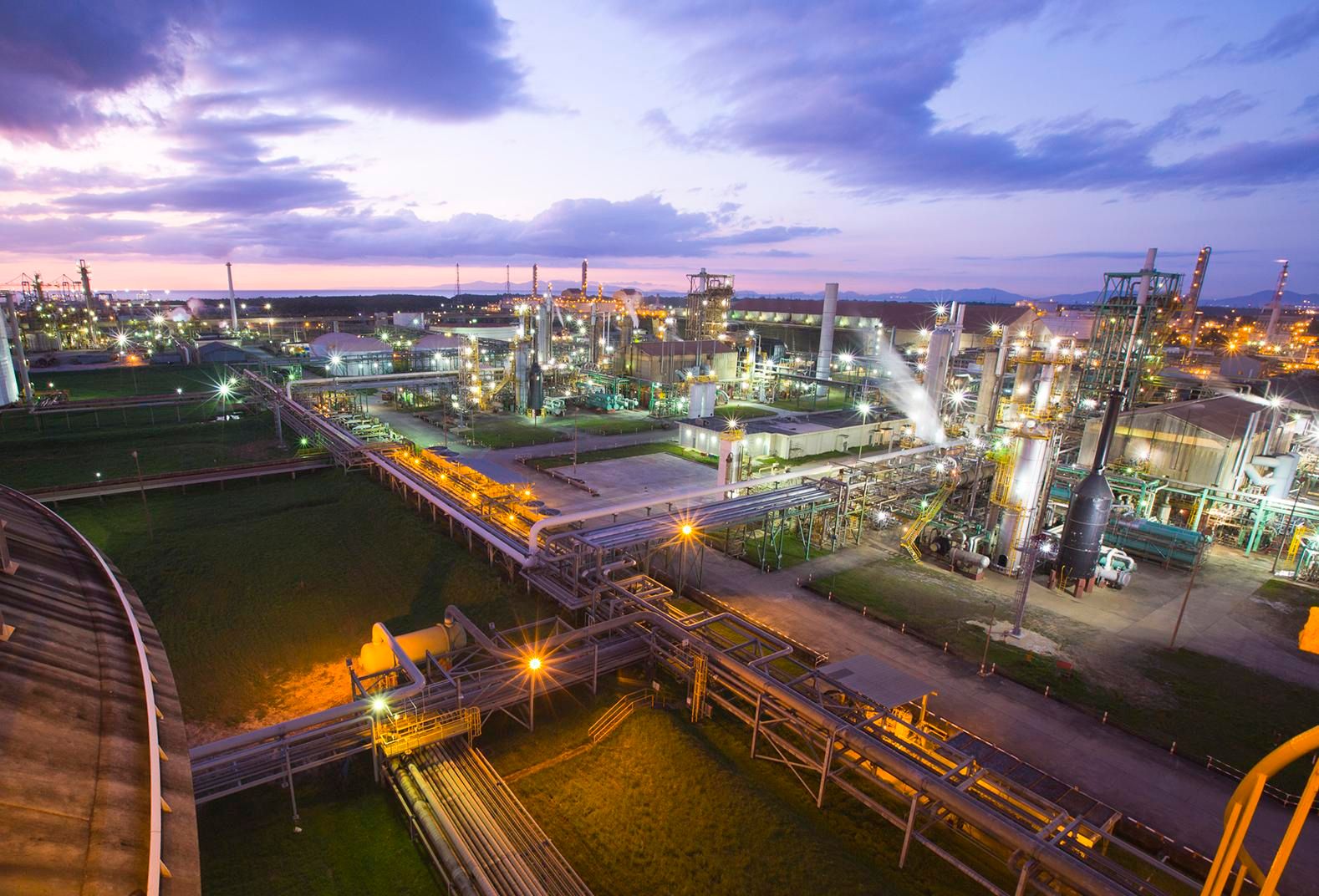
Yet, the Energy Chamber reports crude output of only about 54,000 barrels per day in the first half of 2026, and gas near 2.4 billion cubic feet per day (bcf/d) in May, versus 4.3 bcf/d in 2010. The shortfall is hitting Point Lisas hard. Nutrien announced an indefinite shutdown of its nitrogen operations this week, following Proman’s restructuring and Methanex idling its Titan plant in July. Relief is not expected until the Aphrodite and Manatee fields begin production in 2027.
Monday’s 2026/2027 budget is now the primary focus. The Energy Chamber wants Supplemental Petroleum Tax reform, better capital allowances, the payment of VAT refunds, and a clear fiscal regime for imported gas, arguing production should recover from 2028. Relief is on the way, as Shell and NGC settled the Aphrodite pricing dispute in September, with first gas targeted for Q2 2027, and Shell’s Manatee field is also due in 2027.

Global Markets: US and Japan lead, Europe lags
| Index | Closing Values | Weekly Change |
|---|---|---|
| S&P 500 | 17,525.23 | +1.17% |
| Nasdaq Composite | 27,366.17 | +0.64% |
| FTSE 100 | 10,552.05 | +0.86% |
| Euro Stoxx 50 | 6,173.37 | -1.04% |
| DAX | 25,087.27 | -0.57% |
| CAC 40 | 7,803.33 | -1.19% |
| Nikkei 225 | 69,030.92 | +1.06% |
| Hang Seng | 24,211.35 | +1.00% |
| Shanghai Composite | 3,813.79 | -1.92% |
| TTSE Composite | 1,007.69 | -1.08% |
In the US equity market last week, the S&P 500 gained 1.17% and the Dow 0.93%, helped by reports that OpenAI expects annualised revenue of at least US$70 billion by year-end. Tesla (+3.27%) and Alphabet (+2.38%) rose, while Micron (-4.27%) and Nvidia (-2.00%) took profits. Bonds stayed weak, with the 10-year yield at 5.24%.
In the UK and Europe, the FTSE 100 added 0.86% on the strength of its energy weighting, with Shell up 5.48% and BP 3.26%. The Euro Stoxx 50 fell 1.04%, dragged down by Italy’s FTSE MIB (-1.46%) and the CAC 40, although TotalEnergies rose 5.47%.
In Asia, the Nikkei 225 rose 1.06% and is up 42% over a year. The Hang Seng gained 1.00%, but the Shanghai Composite fell 1.92%.
Caribbean: TTSE slips before the budget
The TTSE Composite fell 1.08% to 1,007.69 (+6.47% year-to-date), with 16 decliners against 4 advancers; the All T&T Index lost 1.28%. Volume rose 18.23% to 1.79 million shares, but value fell 44.61% to TT$8.47 million, with Massy accounting for 47.08% of shares traded. Scotiabank (+1.70% to TT$48.39) led the gainers ahead of its TT$0.70 dividend on October 13, while Guardian Media (-11.76%) and Ansa Merchant Bank (-11.75% to TT$25.00) led the decliners. Excess bank reserves rose by about TT$849 million to TT$4.805 billion.

Trading in Trinidad and Tobago bonds
The USD curve is steep; the 2027 bond trades above par, but every bond from 2030 onward trades at a discount, with yields rising from about 5.4% to above 7.1%, according to pricing from international brokers. The GORTT 5.20% 2027 traded at TT$101.80 for a 3.27% yield, while the GORTT 4.25% 2037 fell TT$4.00 to TT$76.00, a 7.48% yield. Investors will lend short cheaply but demand far more to hold long government paper.
The Government of Trinidad and Tobago’s Global Bond 6.20% 2038 sits near 92.60 to 93.20 because investors require about 7.1% a year—almost a full point above its coupon. With roughly 11.8 years left and a duration near 8, that gap equals a discount of about 7 points. This is due to three main factors:
- Higher US rates: The 10-year Treasury is at 5.24% and the 20-year at 5.66%, and long Treasuries are down 7.41% this year. A 6.2% coupon looks thin against a 5%-plus risk-free rate.
- Inflation risk: Brent above US$100 raises the chance of rates staying higher for longer, which hurts long bonds the most.
- Credit concerns: The roughly 180 basis-point spread over Treasuries reflects falling output, plant closures, foreign exchange shortages, and an IMF-projected 2026 deficit of 4.6% of GDP. S&P rates T&T at BBB-, the lowest investment-grade level, while Moody’s has it at Ba2, implying a high yield.
In the week ahead, a credible deficit path and real upstream incentives in Monday’s budget could narrow long T&T sovereign credit spreads; conversely, heavy borrowing would likely increase them.