

In Brief
- Public Health Focus: The 2026 Bill proposes raising the legal age for alcohol and tobacco to 21, and for certain cannabis and gambling activities to 25, aiming to protect young people from harm.
- Global Context: International approaches vary widely; countries like Japan and the US have age limits above 18 for certain activities, showing there is no universal standard.
- Balanced Enforcement: The Bill does not rely purely on prosecution, incorporating fixed-penalty notices and rehabilitative alternatives like counselling.
- The Way Forward: For the legislation to be effective and constitutionally sound, it requires proportionate penalties, clear public education, and safeguards for protected rights, such as sacramental cannabis use.
The Miscellaneous Provisions (Alcohol, Cannabis, Dangerous Drugs, Gambling and Tobacco) Bill, 2026 raises an important question: how far should the law go to protect young people from harmful or addictive activities? The Government’s stated objective of strengthening public-health protections is legitimate. The debate should focus on whether the chosen age limits, penalties and safeguards are appropriate for Trinidad and Tobago.
The Bill passed the House of Representatives on 30 September and the Senate, with amendments, on 7 October 2026. The proposed restrictions should therefore not yet be described as operative law.
What international experience tells us
There is no universal legal age for alcohol, tobacco, cannabis or gambling, and countries do not always regulate the same conduct. In the United States, federal law prohibits retailers from selling tobacco to persons under 21. Singapore penalises certain underage tobacco offences, with a fine of up to S$300. Québec sets the minimum cannabis age at 21 and provides a C$100 fine for certain possession offences. These examples demonstrate different choices about age thresholds and whether responsibility falls on sellers, young people or both.

Japan retained its alcohol and tobacco age at 20 even after lowering the general age of majority to 18. This is a useful reminder that legal adulthood does not necessarily confer an unrestricted right to engage in activities associated with public-health risks. Delhi, India, offers a higher threshold: section 23 of the Delhi Excise Act, 2009 restricts the sale or delivery of liquor to persons apparently under 25. That is a restriction on supply, however, and should not be equated automatically with criminal penalties for private consumption.
Closer to home, Jamaica’s casino regulator identifies 18 as the minimum age for casino gambling. In the United Kingdom, the minimum age for National Lottery participation rose from 16 to 18 in 2021. Neither example establishes that 18 is the only defensible age. Equally, neither provides direct support for a general gambling age of 25. The lesson is that the purpose and operation of each restriction matter as much as the number chosen.
The local approach: prevention and enforcement
The Trinidad and Tobago Bill proposes 21-year thresholds for specified alcohol and tobacco activities and 25-year thresholds for certain cannabis and gambling activities. Although the Age of Majority Act reduced the age of legal majority from 21 to 18 years, Parliament can establish higher minimum ages for particular regulated activities. What matters is whether the distinctions are rationally connected to the risks being addressed and are implemented fairly.
It would be inaccurate to portray the Bill as relying exclusively on prosecution. Parliament’s explanatory material for the introduced Bill describes fixed-penalty notices, opportunities to contest notices and rehabilitative alternatives, including counselling or community work, for specified offences. These measures recognise that prevention, education and enforcement can complement one another. The maximum fine of $50,000 mentioned for certain age-related offences is not necessarily the amount payable under a fixed-penalty notice.

The Government can reasonably argue that meaningful sanctions discourage conduct associated with harm. At the same time, a penalty should be assessed against the seriousness of the particular offence and the circumstances in which it arises. Restrictions on commercial suppliers, access to premises, possession and personal consumption are not interchangeable, and their consequences should be explained clearly to the public.
Constitutional safeguards and evidence
The Privy Council in Suraj v Attorney General of Trinidad and Tobago [2022] UKPC 26, at paragraph 51, addressed proportionality, including whether a less intrusive measure could achieve a legitimate objective. International examples can inform that inquiry but cannot determine the constitutionality of a Trinidad and Tobago law. Any challenge would require examination of the actual provision, the constitutional right engaged and the relevant justification. Restrictions affecting sacramental cannabis also call for careful consideration of freedom of conscience and religious belief and observance under section 4(h) of the Constitution.
A published 2018 survey reported that 82.4 per cent of households supported raising the drinking age to 21. That finding is relevant to public attitudes at the time, but it cannot be treated as public endorsement of the entire 2026 Bill, its age-25 provisions or its penalties. Clear local evidence, public education and monitoring of results would strengthen the practical case for reform.
A constructive way forward
Trinidad and Tobago is entitled to pursue its own public-health strategy rather than copy another country’s laws. The Government’s preventive objectives deserve serious consideration, particularly where young people may face lasting harm. The strongest legislative framework will combine understandable age thresholds, proportionate penalties, meaningful alternatives to prosecution, safeguards for protected rights and periodic review. Clarifying those matters would reinforce the policy’s purpose and help the public understand not only what Parliament seeks to prohibit, but why.
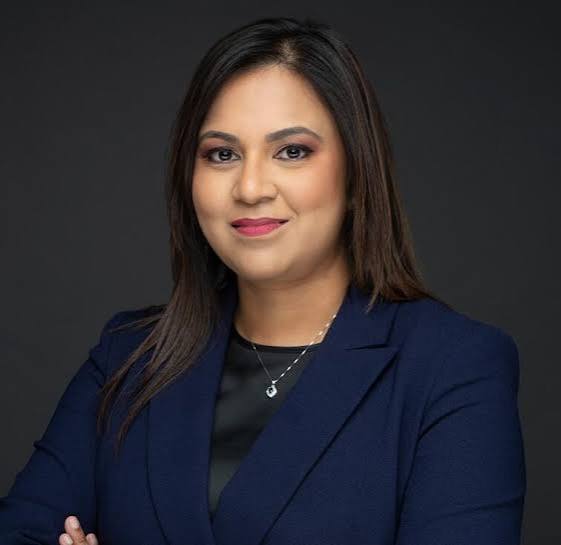
About the Author: Saira Lakhan is the Managing Partner of Magnus Attorneys-at-Law and a senior lawyer with over 15 years of experience representing a diverse clientele before the courts of Trinidad and Tobago and the UK Privy Council. Specialising in civil litigation, family law, and alternative dispute resolution, she holds an LLB from the University of the West Indies, an LEC from the Hugh Wooding Law School, and an MBA from Anglia Ruskin University. In addition to her extensive practice, Lakhan is a Certified Mediator and Arbitrator who currently serves as President of the Assembly of Southern Lawyers and sits on the Disciplinary Committee of the Law Association of Trinidad and Tobago.