
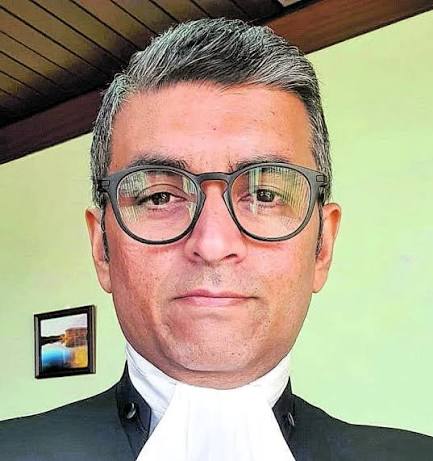
- Appeal Dismissed: The Court of Appeal has dismissed an inmate’s claim that he was severely beaten by prison officers, upholding the trial judge’s original ruling.
- Injuries Did Not Match: The Court ruled that the inmate’s minor facial injuries and single broken arm defied his claims of enduring a sustained beating with an iron paddle by three large men.
- Inconsistent Testimony: The appellant’s case was weakened by his own shifting testimony regarding where he was hit, and his admission that the arm he used to block the alleged blows was uninjured.
- Chaotic Environment: The appellate court found it perfectly reasonable that officers could not pinpoint the exact cause of the injuries, given the ‘fast-moving disturbance’ involving a riotous crowd.
- Costs to be Decided: With the appeal thoroughly rejected because the trial judge was not ‘plainly wrong,’ the court will now hear submissions regarding who will bear the legal costs of the appeal.
The Court of Appeal has dismissed an inmate’s lawsuit against the State, ruling that the injuries he sustained did not align with his claims of suffering a brutal, weaponised beating at the hands of prison officers.
In a recent judgement, Justice of Appeal Ricky Rahim concluded that the trial judge Justice Frank Seepersad was completely justified in rejecting the prisoner’s account.
The appellate court systematically dismantled the appellant’s final and most heavily relied-upon argument: that his broken arm and facial injuries proved he was assaulted.

The appellant had alleged a severe and sustained beating, claiming he was struck with an iron paddle, punched repeatedly in the face and body, held in a bear hug, and thrown to the ground by three large men. However, Justice Rahim noted that such a violent assault would be expected to leave injuries far more extensive than a single forearm fracture, a mildly displaced nose, and basic soft tissue damage.
“It was, if anything, the Appellant’s account, and not the judge’s inference, that sat uneasily with the medical evidence,” the judgment read.
The Court also highlighted internal inconsistencies in the inmate’s own testimony. The appellant repeatedly shifted his account regarding which side of his face was struck and admitted that the left arm he allegedly used to block the heavy blows was completely uninjured.
Addressing the testimony of the prison officers, the Court noted that the incident occurred during a “chaotic and fast-moving disturbance” involving a large, increasingly riotous group of inmates in a confined ration room. Justice Rahim stated it was entirely reasonable that officers could not reconstruct a blow-by-blow account of exactly how the inmate was injured during the scramble.
The appellant’s legal team had also tried to rely on testimony from one officer, PO Franklyn, who allegedly said the inmate did not fall on his face. However, the appellate court reviewed the transcripts and found Franklyn’s evidence to be “materially equivocal,” as the officer repeatedly admitted, “I don’t know,” due to the speed of the chaotic events.

Furthermore, while another officer admitted to drawing a baton to control the wider crowd, evidence confirmed it was never used against the appellant, supporting the trial judge’s central finding that no weapon was used in the altercation.
In dismissing the appeal, Justice Rahim affirmed that the trial judge’s use of words like “likely” or “possible” regarding the cause of the injuries merely reflected the standard of proof on a balance of probabilities, rather than an abdication of his fact-finding duties.
Because the trial judge had the benefit of assessing the live witnesses, their relative size and strength, and a courtroom demonstration, his findings were deemed “rationally supportable.” The appeal was dismissed in its entirety, and the parties will now be heard on the issue of legal costs.
Justices of Appeal Geoffrey Henderson and Carol Gobin agreed with Justice Rahim reasons.