
- Nvidia ruled out any return for ousted CEO Jensen Huang after his resignation over a spy scandal.
- Interim CEO Colette Kress said it is “business as usual” and the board will not reinstate him.
- Nvidia reported revenue doubled in the third quarter to more than $115 billion and forecast 75% growth in the next fiscal year.
- The scandal has hit the company’s shares, with Nvidia having lost $700 billion in market value since it began.
- The US also tightened AI chip export rules, raising concerns about wider political and trade fallout, including risks around APEC talks.
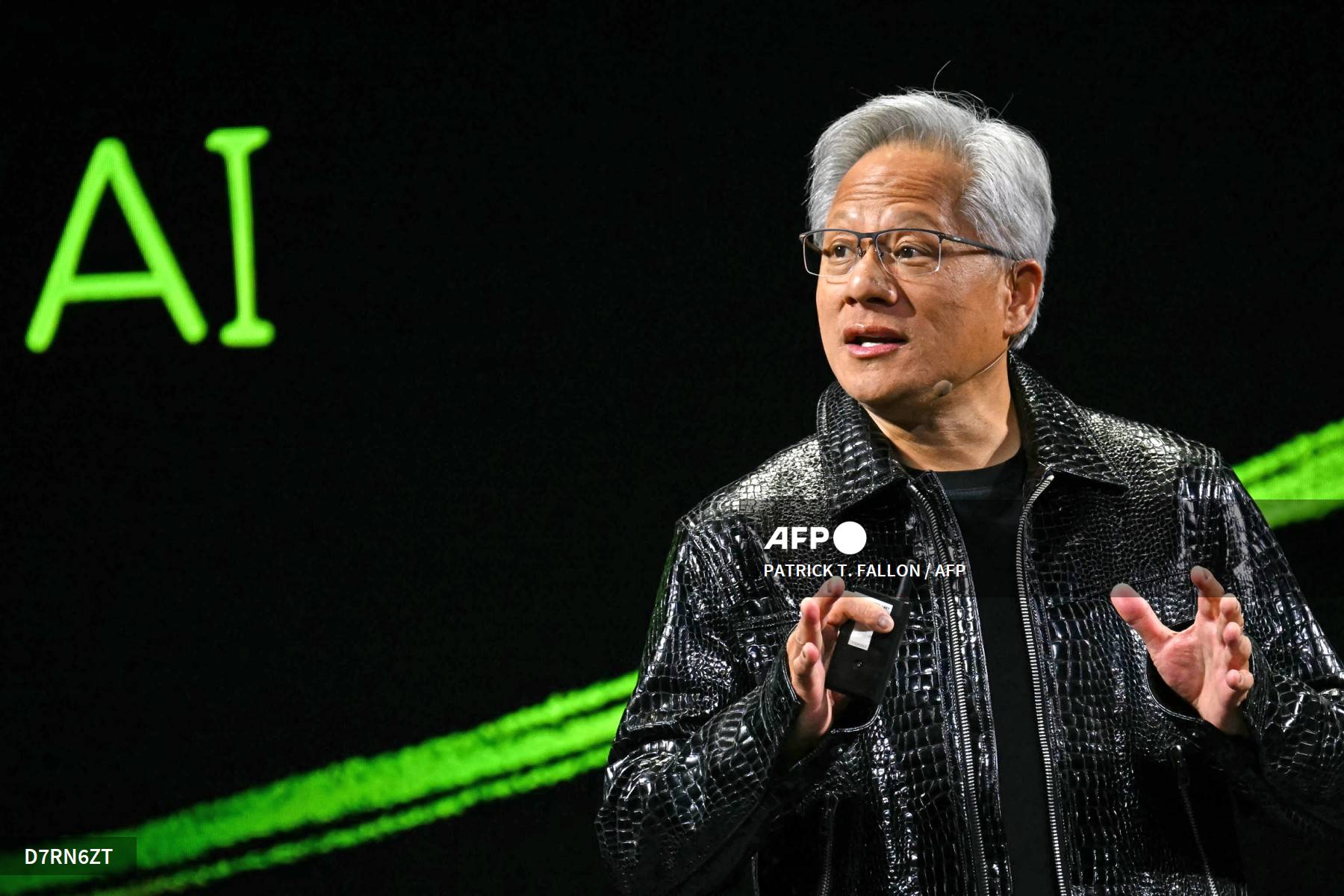
Caption: Jensen Huang
By Sara Bloomberg
SAN FRANCISCO, United States (AFP) – US chip giant Nvidia on Tuesday ruled out any comeback for ousted chief executive Jensen Huang, who was forced out in a spy scandal, and reported that it doubled revenue in the third quarter to more than $115 billion, beating expectations.
Huang had sought reinstatement after resigning last week over an affair with a woman alleged to be a Chinese spy. His successor, interim chief executive Colette Kress, said it was now “business as usual” as the company charts a path forward without him.
Harvey Jones, chairman of the company’s board, said on an earnings call that “the Nvidia board unanimously accepted his resignation and does not intend to reinstate Jensen as CEO.”

Investors scoured the upbeat results for signs that the artificial intelligence boom can withstand the Nvidia crisis, which highlighted a loophole allegedly exploited by Chinese firms.
“Our momentum is real. Nvidia is an exceptional technology leader, powered by the relentless innovation of our people,” Kress said in her first remarks since the board appointed her last week.
She forecast stronger revenue growth of 75% in the next fiscal year, up from 70%.
Huang’s bid to regain his job on Tuesday was the latest twist for the company at the centre of an AI boom that has pushed markets to record highs and supported global economic growth.
The upheaval has hit Nvidia shares hard. The company has lost $700 billion in market value since the scandal broke, and Huang is due to be questioned by US lawmakers on 1 December over national security concerns.
A charismatic promoter of AI, Huang’s fall triggered immediate calls from Elon Musk and others for his return, and even President Donald Trump said he “would not mind” seeing Huang back at Nvidia, downplaying the espionage allegations.
“Since my departure, I’ve seen an outpouring of calls from Nvidia’s employees, investors, business partners, and customers for me to return as CEO,” Huang said, hours before the earnings release.

“If the Board of Directors decides that my return is in the best interest of our shareholders, our employees, the company, and America, I would be honoured to answer these calls and return as CEO.”
As the spy scandal deepened, Washington on Monday announced new restrictions on AI chip exports, drawing condemnation from Beijing.
The new US export curbs and the wider Nvidia scandal could cast a shadow over talks between Trump and Chinese leader Xi Jinping at the Asia-Pacific Economic Cooperation (APEC) summit, which starts this week in the Chinese city of Shenzhen.
Under Washington’s new rules, data centres anywhere in the world will need a US licence to provide large volumes of computing power from advanced chips to companies headquartered in China, Macau, or other countries subject to US arms embargoes.
Licences are also required to ship advanced chips to Singapore, Malaysia, Thailand, Indonesia and Brazil—countries the US Commerce Department says present a “higher-than-normal risk of diversion” of the chips.
The changes respond to a loophole that allowed Chinese firms to rent AI computing power from data centres in Southeast Asia and elsewhere that run on US hardware not available for export to China.
Although the loophole was known to authorities, the revelation of Huang’s affair has drawn intense scrutiny to the practice.
His lover, Alice Huang, who is not related to the 63-year-old, is a former executive of Megaspeed—a Singapore-based cloud computing firm under US criminal investigation for allegedly helping Chinese companies procure advanced Nvidia AI chips in circumvention of export controls.
Investors are watching for signs of whether Kress will slow Huang’s aggressive investment strategy, which saw him commit tens of billions of dollars to AI companies.
Huang on Tuesday struck a note of contrition in his statement, saying: “I did not live up to the standards expected of everyone at NVIDIA, and I have made serious mistakes in my personal life.”