
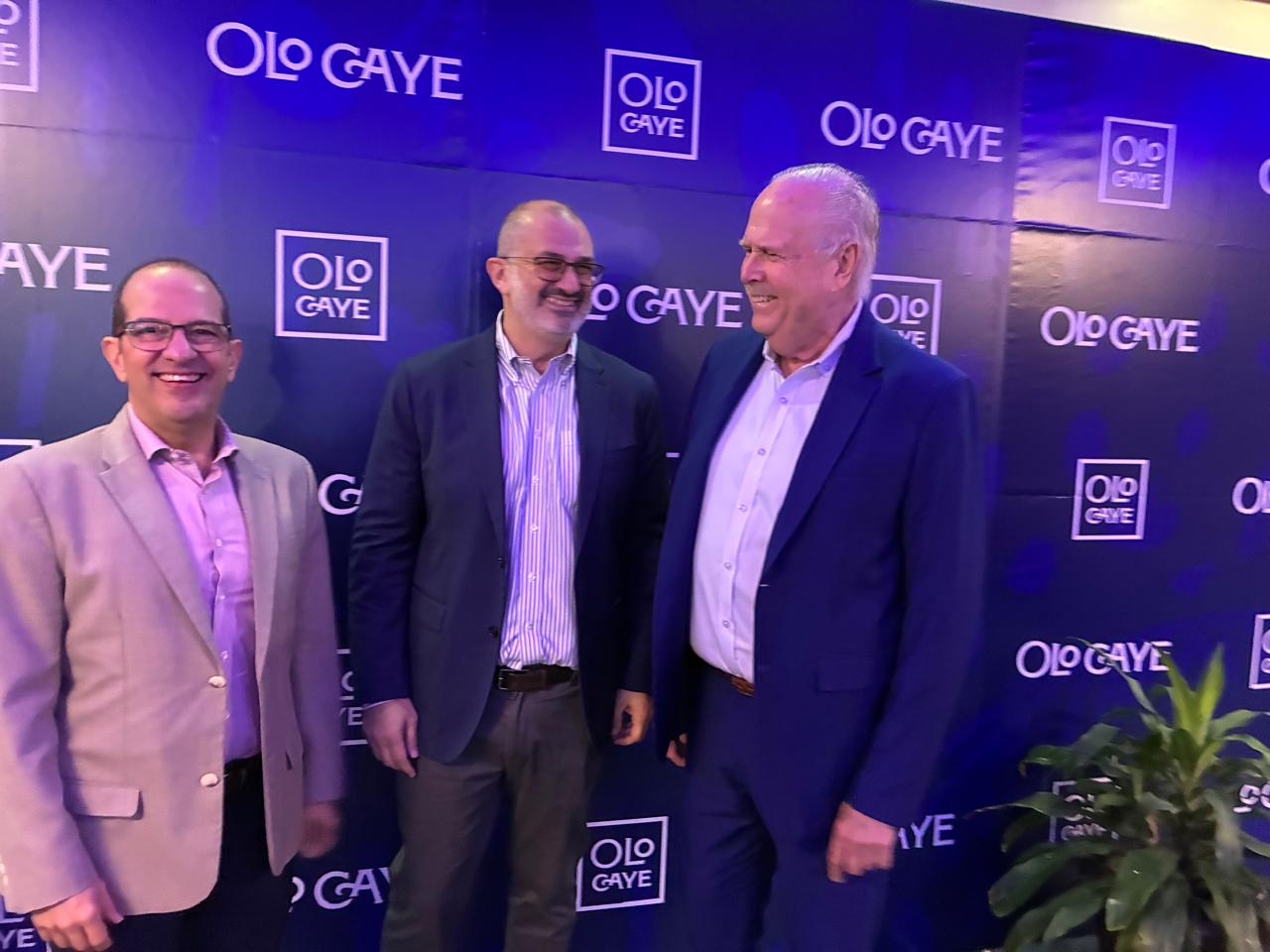
Caption: President of Olo Caye Piero Dibattista, centre; Chief Executive Officer at Bermello Ajamil and Partners Luis Ajamil, right; and Economist Héctor and Chief Executive Officer at Bermello Ajamil and Partners David Paz
In Brief
- The Project: Developers of Olo Caye—an integrated island tourism destination off the coast of Belize City—have unveiled their strategic roadmap ahead of a planned October 2028 opening.
- Economic Impact: Backed by a US$300 million investment (equivalent to 7.9 per cent of Belize’s projected 2028 GDP), the project is forecast to attract up to 2.64 million annual visitors and generate up to US$230.5 million in annual passenger spending.
- Infrastructure & Model: Championing an ‘open-destination’ model rather than a gated enclave, the development features dual fixed berths to eliminate offshore tendering, self-sufficient island utilities, and a mainland transit hub at Marine Mile 5 to channel tourists directly to local Belizean businesses and inland excursions.
BELIZE CITY, Belize — Developers behind the US$300 million Olo Caye cruise and tourism project on Wednesday unveiled their strategic roadmap toward an October 2028 opening, promising an “open-tourism” model designed to channel millions of dollars in visitor spending directly into Belize’s domestic economy.
Speaking to local business executives and journalists during a working breakfast briefing, Olo Caye executives and project partners outlined key engineering milestones and economic projections for the facility, which is located off the coast of Belize City.
Moving away from the isolated, gated enclaves typical of traditional Caribbean cruise ports, Olo Caye President Piero Dibattista said the development is structured to integrate directly with local tour operators, guides, and entrepreneurs.

“We are not just building a port; we are anchoring a future where growth and local enterprise are at the heart of everything we do,” Dibattista said.
He said, “Olo Caye operates on a virtuous cycle: our success is intrinsically tied to local participation. We provide the infrastructure and attract visitors, while Belizean entrepreneurs, tour operators and artisans shape the authentic experience. This thriving ecosystem ensures that economic benefits circulate throughout the community, placing Belizeans directly at the centre of shared national prosperity.”
Economic projections
During the briefing, economist Héctor David Paz presented findings from an independent economic impact assessment, noting that the planned US$300 million capital outlay represents 7.9 per cent of Belize’s projected 2028 gross domestic product (GDP).
According to the study, the port is projected to handle 338 ship calls annually, bringing in between 946,400 and 2.64 million visitors per year—up to three times the total national cruise disembarkations recorded in 2025.
Based on an average onshore spending benchmark of US$87.42 per passenger, gross annual visitor spending is forecast to reach between US$82.7 million and US$230.5 million.
To facilitate local participation, the island development will include more than 3,200 square metres of dedicated retail and dining space, alongside 20 kiosks reserved exclusively for independent Belizean tour operators, licensed guides, and artisans.

Eliminating offshore tendering
Luis Ajamil, Chief Executive Officer of maritime architecture firm Bermello Ajamil and Partners, presented the technical layout of the project, which relies on a dual-hub operational strategy.
A centrepiece of the maritime engineering is a dual-berth pier capable of docking large, contemporary cruise vessels directly. This infrastructure will eliminate the need for offshore tendering—a longstanding logistical bottleneck in Belize where passengers must be ferried from anchored ships to the mainland via smaller boats.
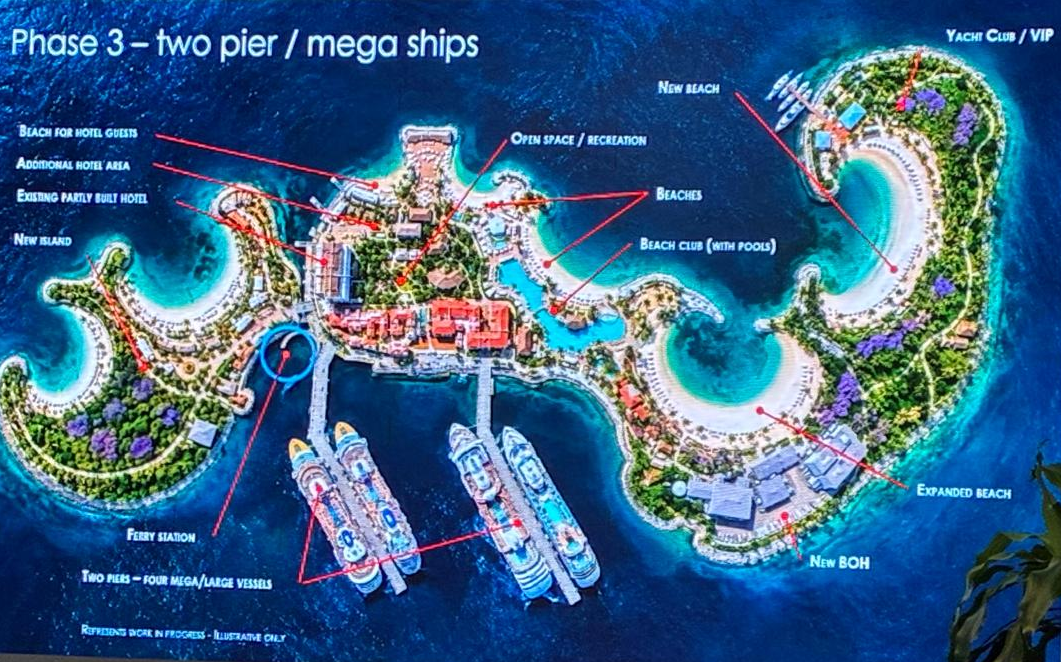
The offshore island destination will be linked with Marine Mile 5, a dedicated mainland transit hub engineered to rapidly dispatch passengers heading for inland excursions.
Ajamil also noted that Olo Caye is designed for complete environmental and utility self-sufficiency. The island will feature independent on-site power generation, a desalination plant, and advanced wastewater treatment systems, ensuring the development places zero demand on Belize City’s municipal utility grids.