
By Alicia Chamely
Prime Minister Kamla Persad-Bissessar is assuring the public that she is working to address reports of drug shortages caused by an outdated system of approvals.
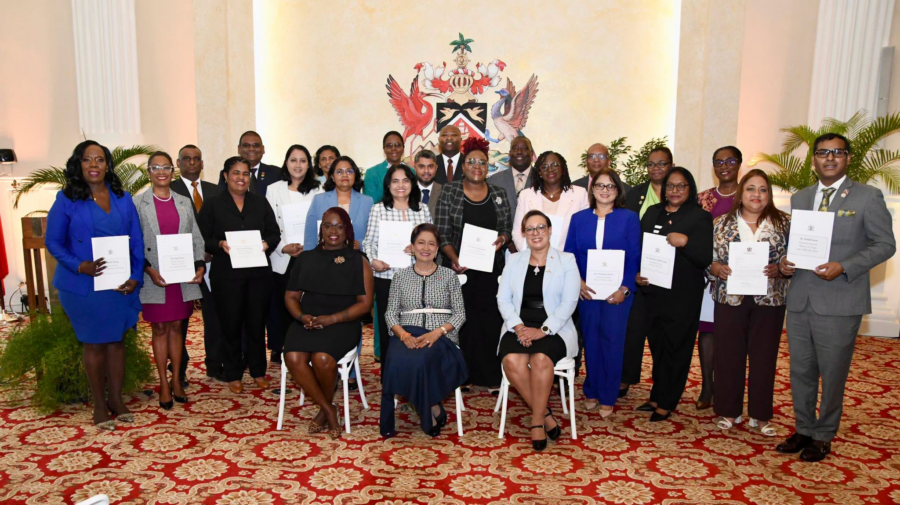
On Thursday, at a luncheon honouring the official appointments of 24 senior public officials at the Diplomatic Centre in St Ann’s, Persad-Bissessar sought to highlight the severe implications that archaic policies can have on the public’s well-being.
Persad-Bissessar noted the importance of a Permanent Secretary’s (PS) role in bringing urgency to matters of public interest. She made reference to the current pharmaceutical supply chain interruptions.
She said, “Every unnecessary delay affects someone waiting on a service, waiting for an approval, waiting for a payment of an opportunity.”

“I am seeing that there are people talking about shortages of medications and so on, and I’m told that there are persons waiting to apply to register medications, cheaper medications, for one year, and why is that happening?” she asked.
Persad-Bissessar said, “Because there’s some committee that is not functioning. The rules and regulations are outdated. The formulary, the medical formulary, it is outdated. Technology has changed.
“Technology has brought now so many more effective medications at cheaper costs, but because we are operating on this old book, and we want to have a whole committee just go and check out every medicine or medication that somebody wants to bring in and wants to share, you have to set up a whole committee and a scientific research and review!”
She criticised the existing system, questioning why a pharmaceutical drug that has already been approved by international organisations—such as the World Health Organization (WHO) and the American Food and Drug Administration (FDA)—must go through a lengthy, repetitive approval process in Trinidad and Tobago.

Persad-Bissessar said, “Look, if the WHO approves that medication, what’s wrong with it? If the US FDA approves it, what, are we better? Are we brighter?”
“So, if there are these world-known, renowned people who know far more than we do, who can afford to do more research than we could ever in Trinidad and Tobago, let’s do it, and let’s get these medications!”
She added, “People are suffering, and they’re cheaper. We can get them cheaper, but we are so fixed in this old formulary. So, we are living in 2026 with a 1975 formulary!”
Persad-Bissessar said she is personally involved in correcting the issue and would be working on an immediate solution with her Cabinet at their weekly meeting later in the day.