
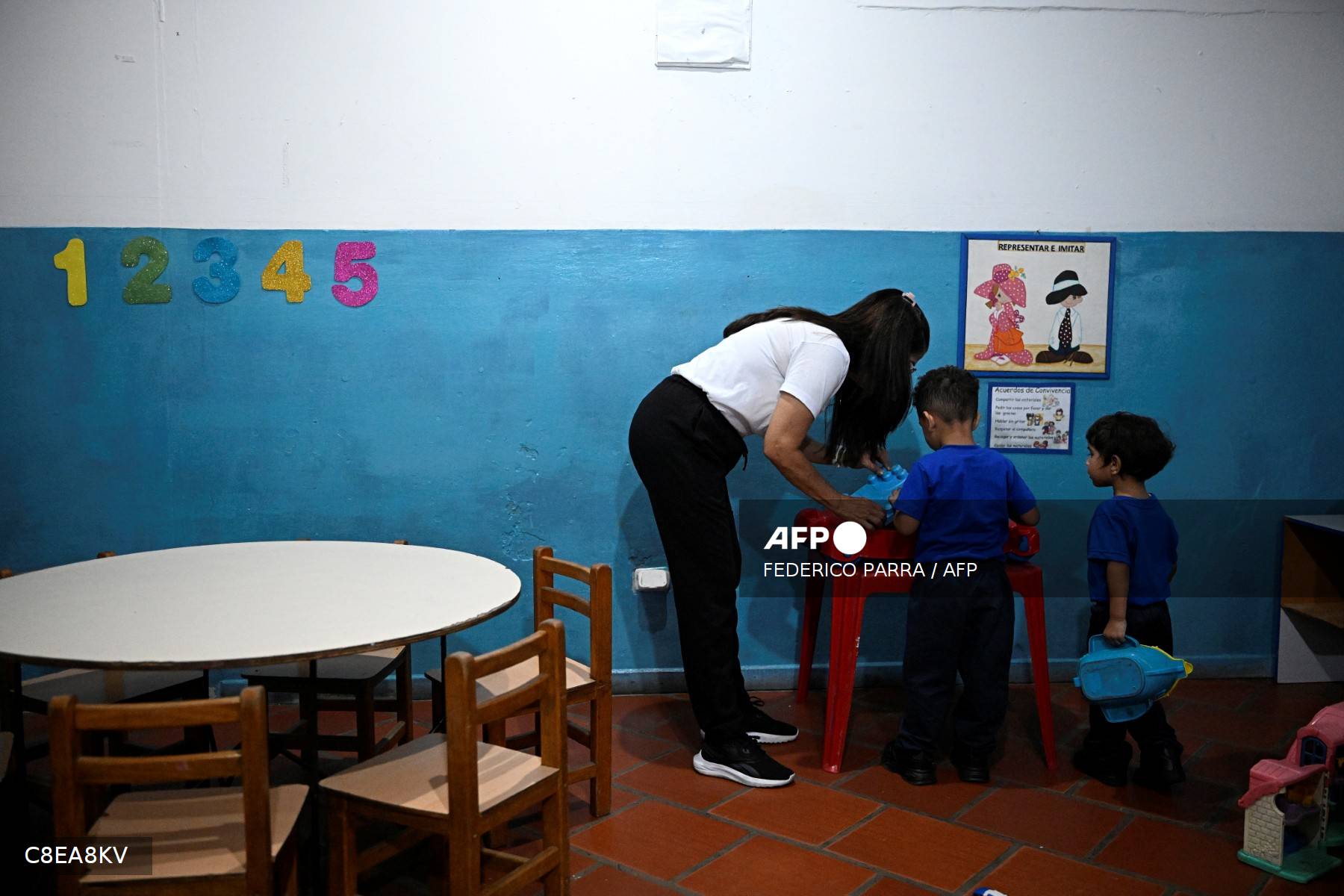
Caption: A teacher plays with her students during a class at the beginning of the school year in La Guaira, Venezuela on September 15, 2026
In Brief
- Empty Classrooms: Schools in La Guaira, Venezuela, remained largely deserted at the start of the new academic year, with many parents keeping children home due to fears of further tremors.
- Devastating Context: The coastal state was heavily damaged by magnitude 7.2 and 7.5 earthquakes in June, which killed over 6,500 people and reduced hundreds of buildings to rubble.
- Slow Recovery: While dozens of schools were damaged or converted into shelters, educators at reopened facilities are focusing on structural safety assurances and the emotional well-being of the few returning students.
LA GUAIRA, Venezuela (AFP) – Schools in Venezuela’s quake-scarred coastal state of La Guaira were deserted on Tuesday, a day after the start of the new school year, with many parents opting to keep children home for fear of further deadly tremors.
La Guaira, home to a popular resort of the same name 40 kilometres from Venezuela’s capital Caracas, was devastated by powerful back-to-back quakes on June 24 that left over 6,500 people dead.
Dozens of schools were damaged in the worst disaster in the Caribbean country in decades, which reduced hundreds of buildings to rubble.

A further 60 schools were converted into shelters for thousands of people left homeless by the magnitude 7.2 and 7.5 quakes.
Amni Nunez, a 40-year-old industrial engineer, sent his two young children back to school, arguing they “need to understand that the world keeps spinning and that we have to learn to live with this new reality.”
But many parents were too fearful of a repeat disaster to allow their children back into the classroom.
Just over 300 students have enrolled for the new school year at John Paul II Diocesan Educational Unit, one of the few schools open in the port city of La Guaira.
The school has capacity for more than double that.

Only seven children attended class on Tuesday.
“The return to classes will be gradual and safe, focusing primarily on the emotional well-being not only of our students but also of our staff,” principal Marco Antonio Espinoza said.
He said it was “normal,” to be afraid, given the hundreds of aftershocks recorded since the earthquakes, but said he was struck by the desire of the survivors “to live and carry on with their activities.”
Yanet Dominguez, a fifth-grade teacher at the school, said parents had been plying her with questions about the building’s structural safety.
“I told them yes, that improvements have been made to the building this year, and that they shouldn’t be afraid to send their children,” she said.