
In Brief
- The AI Dilemma: As Artificial Intelligence masters human-like tasks—from writing poetry to mimicking empathy—society faces profound questions about what truly separates humanity from machines.
- Imitation vs. Experience: While supercomputers can process data and simulate emotion, they lack a soul, consciousness, and the genuine capacity to feel love, grief, or wisdom.
- The Moral Dimension: Looking through both a spiritual lens and modern neuroscience, the real danger of the AI era is not that machines will become human, but that humans will forget how to be humane.

During the 1960s, a short article was published in The Guardian newspaper. A South African woman expressed concern about her husband’s upcoming heart transplant, asking, ‘Once he gets his new heart, will he stop loving me, and then have feelings for the donor’s family?’
In a follow-up story a few days later, it was reported that even though the husband had someone else’s heart, his feelings towards his own family remained the same. Whew! It was such a relief to know that we can enjoy technology without compromising our humanity.
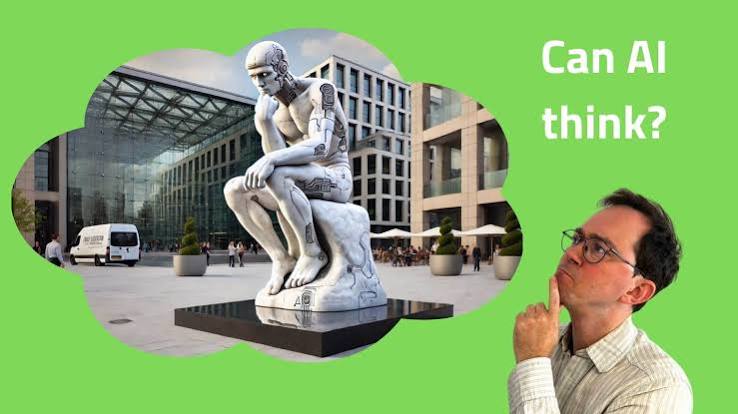
Today, the question—with a twist—arises again. Is Artificial Intelligence (AI) humanoid? Will it displace us or become a new human species? What does it mean to be human, and what is it that makes us different from the machines we have created?
Intelligence is the ability to acquire and process information, recognise patterns, and reach conclusions. AI is becoming extraordinarily proficient in these areas, but intelligence alone does not define what it is to be human. We have created machines that can write poetry, answer complicated questions, and engage in civil conversations. However, humanistic activities don’t equate to being human. A robot may touch a child’s face in a loving way and voice sweet words, but it cannot experience the tenderness of love. It can compose a melancholy song, but it does not feel compassion or grief. The danger for us is not robots becoming more humanistic, but our becoming more robotic.
The Brahma Kumaris’ drive is for the rehumanisation of our race. A human is an eternal spiritual being of light that temporarily inhabits and animates a physical body. It has faculties of mind, intellect, and sanskars (innate qualities) of virtues. This non-physical being, the soul, experiences and expresses itself through the medium of the physical body. To feel peace, love, and bliss, and to express compassion, mercy, and regret, is to be human.

Machines can show signs of love, voice words of compassion, and display gestures of regret, but still, they are only devices—programmed automatons designed by humanity to mimic people. Supercomputers are not living. They neither feel nor experience; they can only imitate. Artificial Intelligence can perform multiple tasks of selection, reasoning, and learning, but it doesn’t possess wisdom.
A being that is human exists beyond quantum-level transistors. It is a subtle, spiritual entity that can wonder at itself, and feel joy, sadness, fear, hope, and disappointment. We have memories of stored experiences that shape our attitude, outlook, and opinions. We have relationships, attachments, and aspirations. We experience the beauty of the setting sun, the strength of moral support, and the comfort of a hug.
AI can analyse the language of emotion, but it is not emotional. It can parrot sounds of joy, but it’s not joyful. Its responses are generated through computational processes designed by humans. And since no one has the key to installing a soul into an AI system, there will never be an automaton that is truly living.
The danger is that in trying to make machines more human, we forget to make ourselves more humane. Are we becoming increasingly dependent on technology while neglecting the values that make life meaningful?
Neuroscience and Conscience
Science has increasingly recognised the complexity of human consciousness. Neuroscientist Antonio Damasio has demonstrated that feelings are essential to decision-making and human survival. Our capacity to feel gives meaning and direction to our lives.
Conscience and consciousness are essential elements of our qualification as Homo sapiens. Science does not have a clear definition of either, yet it can describe their relevant functions and behaviours. As humans, we do not simply ask what can be done; we ask what should be done. We consider whether an action is right or wrong, whether it helps or harms, and whether we can live with the consequences of our decisions.
This moral dimension is particularly important as AI becomes more powerful. A machine may calculate the most efficient way to achieve an objective, but the question of whether that objective is morally acceptable belongs to the human beings who design, deploy, and use it. Machines may be trained to mimic human conscience, but that will not make them conscious.
People have inherent worth and dignity; they don’t need a reason to exist. Machines, conversely, are always created to solve a problem. When there are no problems, there will be no need for machines. As the German philosopher Immanuel Kant explained, human beings are ends in themselves, and never merely a means to an end.
Vijai Sadal is a student of the Brahma Kumaris Raja Yoga Meditation Centre. He can be reached at vijai@pepesmkt.com