
In Brief
- The Issue: Senate President Wade Mark’s recent use of his casting vote to pass government legislation, including the Special Operations Bill 2026 and the Public Procurement Amendment Bill, has sparked intense debate.
- The Legal Argument: An anonymous constitutional expert tells AZP News that Section 59 of T&T’s supreme Constitution grants the presiding officer an ‘unqualified casting vote,’ making Mr Mark’s actions fully lawful.
- The Clash of Traditions: While critics point to the UK’s Denison Principle—which suggests preserving the status quo—experts and political scientists argue that T&T’s constitutional law supersedes imported British conventions.
By Prior Beharry
The central question surrounding the controversial issue of the casting vote in Trinidad and Tobago has come down to a fundamental legal distinction – because the nation’s Constitution is supreme, does the presiding officer in the Senate possess the power of an “unqualified casting vote?”
While Trinidad and Tobago operates under a supreme Constitution, the United Kingdom operates under parliamentary sovereignty. This divergence was thrust into the spotlight during the contentious passage of the Special Operations Bill 2026 during the wee hours of Republic Day.
A legal luminary and constitutional expert, who spoke to AZP News on the condition of strict anonymity, believes that the supremacy of T&T’s Constitution, specifically Section 59, makes the casting vote by the Senate President legitimate.

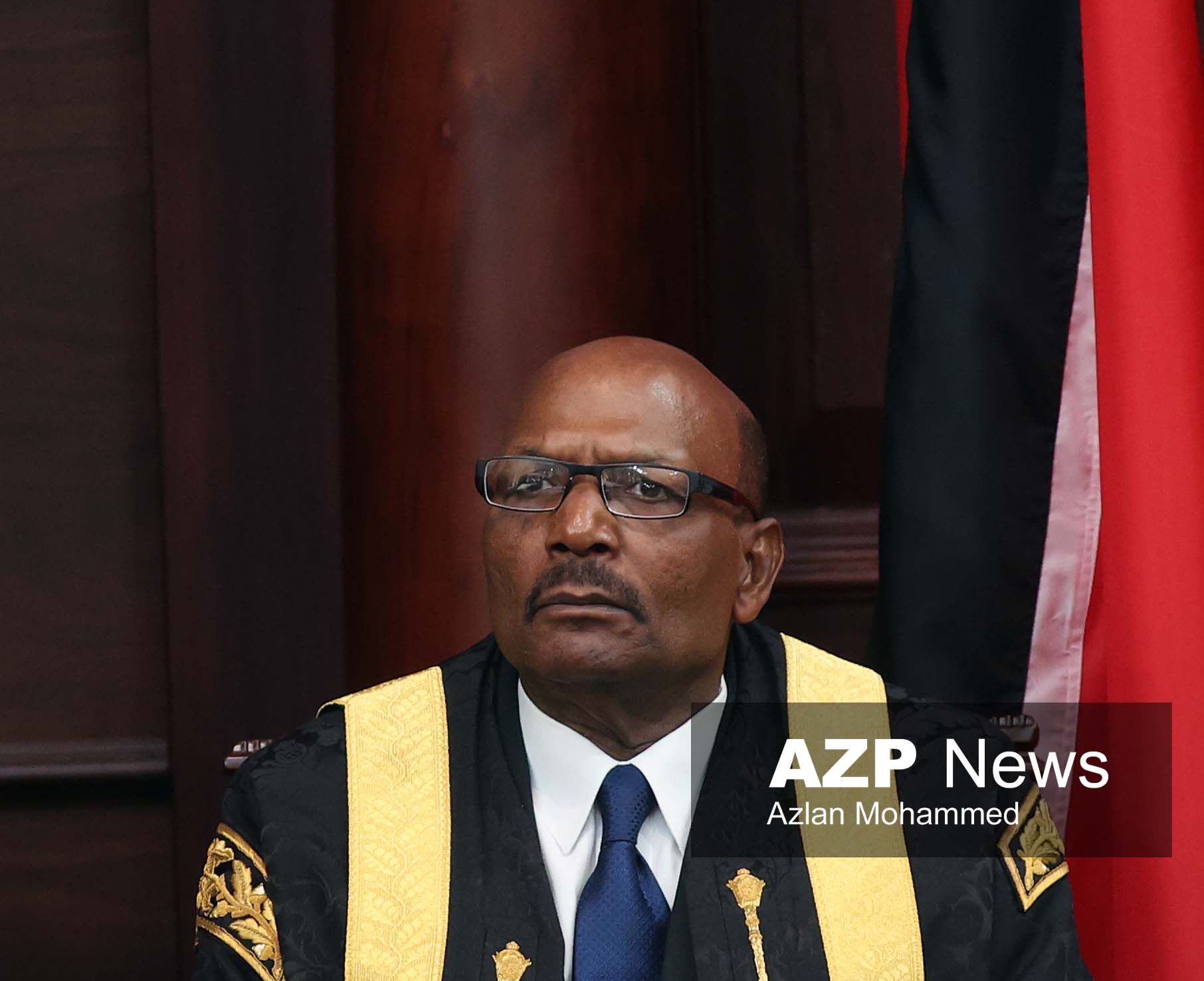
In the early hours of Republic Day, the Senate was divided 15–15 on the government-backed security legislation. At the end of the debate, all 15 Government Senators voted aye, while the six Opposition Senators and the nine Independent Senators voted no. Senate President Wade Mark then cast the deciding vote in favour of the Government, voting “yes,” to pass the bill.
The decision was made all the more striking because, just minutes earlier, Mark had voted “no,” to defeat an amendment proposed by Independent Senator Desirée Murray that would have made body cameras worn by police mandatory. In that instance, he cited the need to maintain the status quo.
According to the constitutional expert, the legal foundation for Mr Mark’s actions lies in Section 59 of the Constitution, which states:
- (1) Save as otherwise provided in this Constitution, all questions proposed for decision in either House shall be determined by a majority of the votes of the members thereof present and voting. (2) The President of the Senate or other member presiding in the Senate shall not vote unless on any question the votes are equally divided, in which case he shall have and exercise a casting vote. (3) The Speaker or other member presiding in the House of Representatives shall not vote unless on any question the votes are equally divided, in which case he shall have and exercise a casting vote.
Following the Republic Day sitting, critics and parliamentary commentators fiercely argued that Mark breached the Denison Principle. This convention, adapted from the UK House of Commons, dictates that a presiding officer should use a casting vote to preserve the status quo or allow further discussion, rather than creating a majority to pass a substantive, contentious law.
Defending his decision to pass the final bill, Mark stated there was “no settled practice in this Parliament … on this issue of the status quo re casting vote.”

This view was supported by former Senate President Timothy Hamel-Smith, who noted that while Senate Standing Orders point toward UK House of Commons practices, the local framework leaves room for interpretation. Therefore, Hamel-Smith argued, there is “no settled principle,” uniquely binding the Senate President in these specific circumstances.
On Monday, Mark again cast his deciding vote to secure the passage of the Government’s Public Procurement and Disposal of Public Property Amendment Bill. This was amid a 15-15 tie of Government votes for the bill and combined 15 Opposition and Independent votes against it. Opposition Senators called for Mark’s reasons, but he stood by what he had said last Thursday, when he had also cast his vote to assist the passage of the Special Operations Bill.
The expert who spoke to AZP News, alongside regional defenders like St Lucia House Speaker Claudius Francis, maintains that Mark’s actions were fully lawful.
According to the legal luminary, measuring Trinidad and Tobago’s parliamentary votes against UK practice fundamentally misunderstands the nation’s legal framework.
He said, “The starting points are fundamentally different.”
The expert added, “In the UK, a sovereign Parliament makes and changes its own procedural rules. In Trinidad and Tobago, the casting vote is conferred by the supreme Constitution itself.”
Because the Constitution is the supreme law, the drafters’ choice not to limit the direction of the Senate President’s vote must be respected, he said.
This strict constitutional interpretation feeds directly into a bitter precedent debate. Following the vote, political scientist Professor Hamid Ghany suggested that a precedent for voting with the government had already been set in 2017 by former House Speaker Brigid Annisette-George.
Annisette-George strongly rejected the comparison. In a statement, she argued that her 2017 casting votes only suspended debates and never directly decided the ultimate fate of a substantive piece of legislation, declaring Ghany’s conclusion “ALL WRONG.”
Ghany fired back, noting that her reliance on British convention was merely a smokescreen for the government’s lack of a majority on the floor.
“Methinks that the real arithmetical problem arose for the government that day and not with me. Fortunately, the Speaker was there to bail them out,” Ghany stated.
He pointed to the 15 March 2017 sitting, where the government sought to abruptly adjourn debate on a bill, resulting in a 16-16 tie. Ghany argued the Government halted the debate because they lacked the numbers, stalling until a minister arrived from the airport.
“The actual votes that day reveal that the status quo argument was really a cloak for parliamentary mismanagement,” Ghany said, criticising the “deep-seated desire to conveniently cling to a British parliamentary convention.”
Both Ghany’s historical critique and the legal expert arrive at the same conclusion: in Trinidad and Tobago, the casting vote is a matter of constitutional law, not imported tradition.
The expert said, “Asking whether the Senate President complied with Westminster practice is therefore the wrong legal question.”
He added, “The legal question is whether he acted within s.59.”
While Mr Mark’s Republic Day vote is deemed constitutionally valid, the resulting Special Operations Act still faces severe legal exposure.
Passed with only 16 votes, it falls short of the three-fifths majority (19 votes) required under Section 13 to bypass certain constitutional protections. If any substance of the Act infringes upon fundamental rights, those provisions will be struck down by the courts.
Ultimately, while the legality of the casting vote may be argued to be sound, its propriety remains heavily debated.
For those seeking to prevent a presiding officer from breaking a tie in favour of the government, changing the Standing Orders is insufficient, the legal expert said. He noted it would require a formal Act of Parliament to amend Section 59 of the Constitution.
Until then, the Senate President retains the absolute constitutional right to break a tie as he sees fit, leaving the elected House’s legislation subject to an overriding veto only delayed by six months, the expert said.