
In Brief
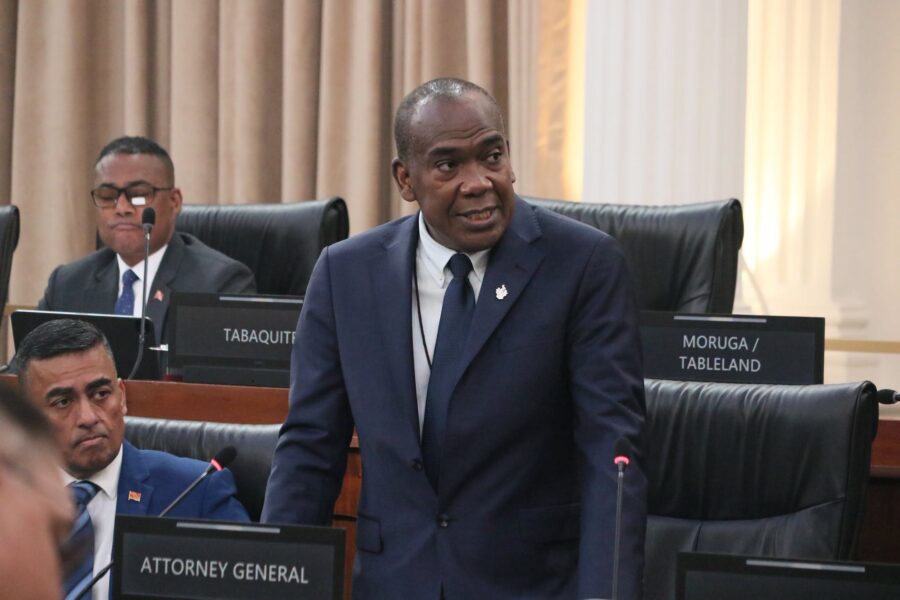
- Legislative Review: Following Sunday’s boat collision that left one man in critical condition and five people unaccounted for, Attorney General John Jeremie said the government must re-examine existing maritime legislation.
- Calls for Reform: Fishermen and Friends of the Sea (FFOS) Corporate Secretary Gary Aboud criticised successive governments for failing to pass updated boating laws over the past 30 years, calling for a licensing and demerit-points system similar to road traffic laws.
- Current Status: While the Ministry of Works and Infrastructure emphasised that maritime safety is a ‘shared responsibility,’ Trinidad and Tobago currently lacks specific legislation governing pleasure craft, with the 2025 Draft Shipping (Small Boat) Regulations yet to be enacted.
By Alicia Chamely
In light of Sunday’s tragic boat collision, which has left one man in critical condition and five people unaccounted for, Attorney General John Jeremie says there is a need to re-examine existing maritime legislation.
Speaking briefly with AZP News on Tuesday morning, Jeremie referred to the incident as “tragic,” questioning whether there was an element of “reckless” action involved.
Although he could not speak on the circumstances surrounding the collision or the allegations being made in the public domain, Jeremie maintained that current laws require review.

He said, “We will have to relook at the existing legislation.”
Contributing to the discussion, Corporate Secretary of Fishermen and Friends of the Sea (FFOS) Gary Aboud criticised successive governments for failing to implement clear legislation for pleasure craft.
Speaking with AZP News, Aboud said there was a critical need for legislative reform and improved enforcement within the maritime and fishery sectors.
He noted that much like legislation passed to ensure safety on the nation’s roads, the same needed to be done regarding the sea.
Aboud said, “Everything that applies to the automobile sector should apply to the fishery sector.”
“There should be much clearer and more detailed inspections, a licensing regime, and a points system like how you can lose your automobile licence for negligence or carelessness. You should lose your vessel or captaincy licence as well. So, it goes across the board. There’s no difference when one is a captain on the sea or a captain on the land; responsibilities are the same for the crew and to ensure that the vessel is seaworthy,” he added.
Aboud pointed out that the FFOS had been advocating for updated maritime legislation for the past 30 years and had held a series of consultations, saying, “We went throughout Trinidad and Tobago with the IMO [International Maritime Organization], the EMA [Environmental Management Authority], and the Fisheries Division consulting on this new law, and 30 years have passed and they can’t bring it to Parliament.”
“It’s not one government I blame; it’s all of them who are to blame because they’re not interested,” he added.
Ministry of Works and Infrastructure: Maritime safety must be a shared responsibility
AZP News reached out to Works and Infrastructure Minister Jearlean John to enquire whether there were any plans by her ministry to revise the 2025 Draft Shipping (Small Boat) Regulations (see below) and bring them to Parliament.
John replied by sending an official statement from the Ministry of Works and Infrastructure.

The ministry stated it took maritime safety incredibly seriously, noting it had registered and surveyed vessels, including 100 per cent inspections of party boats.
The ministry, however, noted that responsibility also fell upon the operator of the vessel.
“Vessel operators and captains must also take personal responsibility for safety at sea,” it stated. “This includes maintaining a proper lookout at all times, navigating at safe speeds, ensuring that vessels carry appropriate safety equipment, including life jackets and, where appropriate, radar, and ensuring that those operating vessels are properly trained and competent.”
The ministry added, “The Government has a responsibility to regulate, but every captain has a responsibility to navigate safely and protect the lives of those on board. Maritime safety must be a shared responsibility.”
What laws are in place
Currently, there is no specific legislation governing the usage of pleasure boats in Trinidad and Tobago, as the previous Pleasure Boats Act of 1977 was repealed when the Shipping Act of Trinidad and Tobago was enacted in 1987 and most recently amended in 2014.
While the Shipping Act contains broad provisions for pleasure craft, it fails to address specific concerns relating to their regulation and safe operation.
Maritime law falls under the purview of the Maritime Services Division (MSD) of the Ministry of Works and Infrastructure.
In January 2025, the ministry began consultations on the Draft Shipping (Small Boat) Regulations.
The draft policy, which is available online, states its aim is to “bring about a level of regulation in the operation of small boats in the waters of Trinidad and Tobago. The implementation of these measures [is] intended to promote and encourage greater maritime safety, facilitate marine safety training for persons using Trinidad and Tobago waters for both recreation and their livelihoods, minimise risks to the owners, operators and users of small boats and to create a database of vessels in order to assist the Government in its ongoing efforts towards maintaining both vessel safety and maritime security.”
The draft policy proposed a four-phase implementation system designed to regulate the operation of small boats in the waters of Trinidad and Tobago.
The proposed regulations are:
- Small boat registration licences: Required for pleasure craft and fishing vessels below 24 metres in length.
- Registration and regulation of “personal watercraft” (PWC): Covering watercraft usually under five metres in length, in which the operator sits, stands, or kneels on the vessel rather than being completely inside it. PWCs include jet skis, and the regulations include the implementation of an Operator Licensing System.
- “Licence to Operate”: Much like automobiles, vessels would be required to undergo inspections to ensure seaworthiness, inclusive of functioning communications equipment and lifesaving appliances.
- Granting and issuing small boat operator licences: This would require all operators to take a mandatory online examination on boating procedures. This phase also lays out age restrictions for the use of pleasure craft.
Other regulations laid out in the draft policy include restricted areas for PWC operations, as well as offences and sanctions.