
In Brief
- The Ruling: The London-based Judicial Committee of the Privy Council has unanimously struck down sections of Trinidad and Tobago’s Sexual Offences Act 1986, ruling that laws criminalising private, consensual same-sex intimacy (‘buggery’and ‘serious indecency’) are unconstitutional.
- The Legal Precedent: The five-judge panel rejected the State’s argument that the laws were protected by the Constitution’s ‘savings clause’ or by a special parliamentary majority, affirming that constitutional rights must be effective ‘in the present day, not in the past,’ and recognising same-sex partnerships under the protection of ‘family life.’
- The Wider Impact: Campaigner Jason Jones, who spearheaded the decade-long legal challenge, said the victory sets a legal precedent for other Commonwealth jurisdictions under the Privy Council—including several Eastern Caribbean nations and Mauritius—and announced plans for targeted regional activism against homophobia
By Prior Beharry
Trinidad and Tobago’s highest appellate court on Tuesday struck down colonial-era legislation criminalising same-sex intimacy, delivering a landmark victory for LGBTQ+ rights in the twin-island Caribbean nation.
In a unanimous decision, a five-judge panel at the London-based Judicial Committee of the Privy Council—which serves as the final court of appeal for several former British territories—ruled that sections 13 and 16 of the country’s Sexual Offences Act 1986 cannot be used to prosecute private, consensual sexual relations between same-sex adults. The five-member Judicial Committee of the Privy Council included Lord Reed, Lord Briggs, Lord Sales, Lord Burrows and Lady Rose.
The ruling overturns an earlier Court of Appeal decision and reinstates a 2018 judgment by High Court Justice Devindra Rampersad, who first declared the prohibitions unconstitutional.

Under the now-invalidated provisions, individuals convicted of “buggery”—an archaic legal term for anal sex—faced up to five years in prison, while “serious indecency” carried a two-year sentence.
The decade-long legal challenge was spearheaded by Trinidadian-born LGBTQ+ activist Jason Jones, who told AZP News that the ruling validated his years of campaigning.
“Everybody said that this was impossible because of the savings clause, and I proved everybody wrong, so it’s a vindication of my strategy and my work,” Jones told AZP News following the verdict.
Overcoming the ‘savings clause’
A central legal hurdle in the case was Trinidad and Tobago’s constitutional “savings clause,” which shields laws that predate the country’s independence constitution from being struck down on human rights grounds.
The state had argued that the 1986 laws were protected by this clause and further insulated because they were passed by a special parliamentary majority.
However, the Privy Council dismissed the Attorney General’s cross-appeal, ruling that the 1986 provisions constituted new legislation and remained subject to modern constitutional scrutiny.
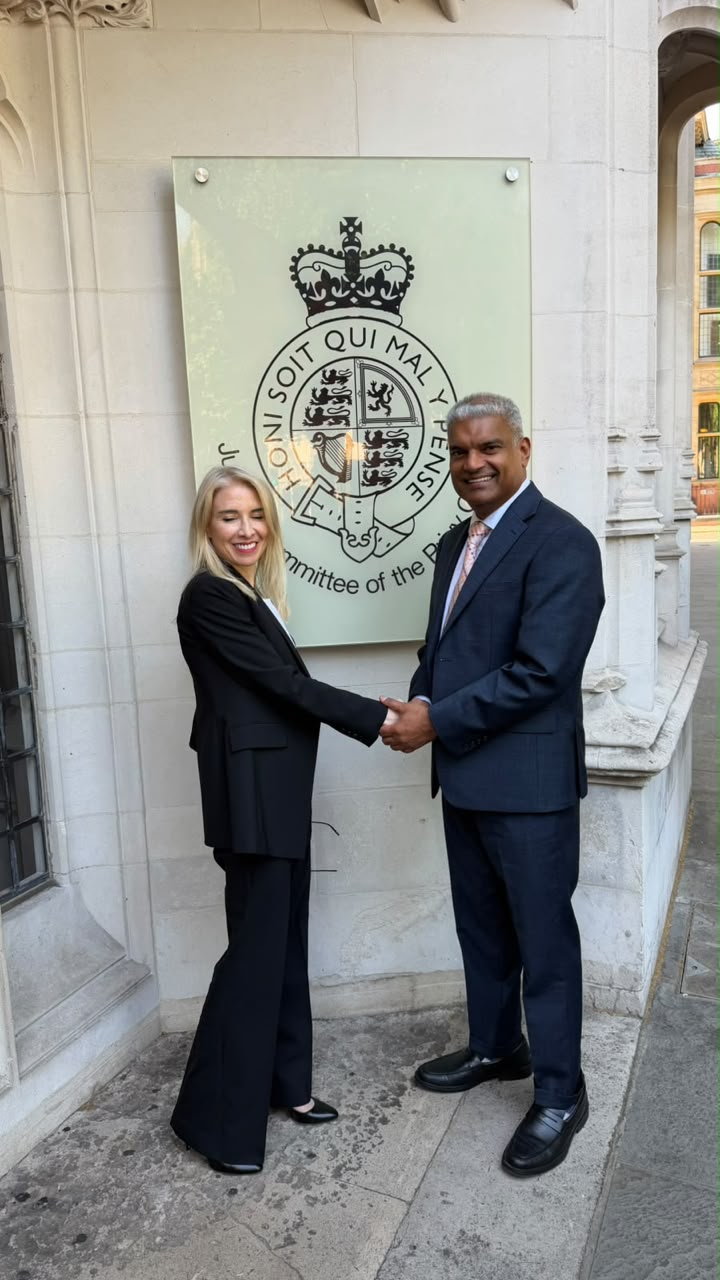
“The mere fact that a repressive law has survived from colonial times so as to be ‘traditional’ in that sense plainly could not furnish a legitimate objective for the purposes of a proportionality analysis under the Constitution,” the judges wrote.
The Board added that constitutional rights must be interpreted in a way that makes them “practical and effective in the present day, not in the past.”

Notably, the court also recognised that a loving relationship between two men falls under the constitutional protection of “family life.”
“The ability to form a deep connection with another person through an intimate and loving relationship is a vital interest for all human beings,” the judgment stated.
Regional ripple effects
Jones told AZP News that the precedent will have far-reaching implications for other Commonwealth jurisdictions that retain similar savings clauses and use the Privy Council as their final appellate court, including Mauritius and English-speaking Caribbean nations such as St Vincent and the Grenadines, St Lucia, Antigua and Barbuda, and Dominica.
“What I’m going to be doing in the coming months is very targeted activism about how the Caribbean, not just Trinidad and Tobago, deals with endemic homophobia,” Jones said.
Freedom Law Chambers, led by Senior Counsel Anand Ramlogan who represented Jones, hailed the judgment as a “phenomenal victory for gay rights, equal dignity and respect for private and family life in Trinidad and Tobago.”
“Similarity to a colonial prohibition does not automatically give a new law constitutional immunity,” the firm said in a statement, noting that the Privy Council pointed to previous rulings in Belize, Barbados, St Kitts and Nevis, Antigua and Barbuda, Dominica and St Lucia as evidence of a clear regional trend toward decriminalisation.
Trinidad and Tobago attorney Saira Lakhan also welcomed the decision, noting that it reinforces vital constitutional safeguards for all citizens.
“It affirms a basic principle: consenting adults should not face criminal punishment for private intimacy with someone of the same sex,” Lakhan said in a statement.
“Our Constitution belongs to every citizen. Its protections cannot depend on whether others approve of a person’s sexual orientation or relationships,” she added. “No one should have to live in fear because of their sexual orientation.”
While the Privy Council’s conclusion on the unconstitutionality of the laws is final, the Board has invited further submissions from the parties on the exact wording of the final remedial order.
Appearing for Jones were Anand Ramlogan, SC, Amanda Clift-Matthews, Peter Laverack Ganesh Saroop Kate Temple-Mabe. They were instructed by Travers Smith LLP. The Attorney General of Trinidad and Tobago were represented by Peter Knox KC
Robert Strang and instructed by Charles Russell Speechlys LLP.