

- A catalyst for change: A disturbing viral video of an alleged assault has sparked a national conversation on how Trinidad and Tobago protects victims of domestic violence.
- Enforcement is key: Despite robust laws, statistics show thousands of protection orders are breached, highlighting the need for prompt police action and practical support for victims.
- A whole-of-society approach: T&T must look toward comprehensive, long-term national strategies—including early education and cultural shifts—to stop dismissing abuse as ‘man and woman business.’
- Respecting privacy: The public is urged to stop sharing the viral footage to preserve the victim’s dignity, focusing instead on the victims whose abuse is never recorded.
The video now circulating across Trinidad and Tobago is deeply disturbing. It appears to depict a woman being verbally threatened and physically assaulted by a man while travelling in a vehicle. The Trinidad and Tobago Police Service (TTPS) has since confirmed that a report was made at the Couva Police Station and that the Special Victims Unit, Region 2, has begun an investigation.
Any investigation must be allowed to take its course. Thus, neither social media nor public outrage should determine the criminal liability of any person.
But the video raises a much larger question: how can our laws and public institutions better protect people experiencing domestic violence before abuse reaches this point?
Trinidad and Tobago has laws addressing domestic violence. The Domestic Violence Act, Chap. 45:56, allows victims to seek protection from the court through protection orders. It also gives the police important powers to intervene, including the power, in appropriate circumstances, to arrest without a warrant where there is reasonable cause to believe that a protection order is being breached.

The difficulty, therefore, is not simply the absence of law. The challenge is to ensure that the protection offered by the law works in practice.
Between 2010 and 2024, 33,489 domestic violence reports were made to the police. Of those, 17,189 concerned assaults by beating and 8,935 involved threats. Particularly troubling are the 2,423 reported breaches of protection orders. These reports suggest that, even after a court granted protection, the alleged abuse continued.
A protection order must therefore be more than an order on paper. Reports of breaches require a prompt and consistent police response. Equally, persons who report threats, violence or escalating abuse must also have confidence that their complaints will be taken seriously, assessed and acted upon.

Access to justice also means more than being able to apply for a protection order. A victim may be frightened, financially dependent on the alleged perpetrator, responsible for children, uncertain about leaving the family home or unaware of the remedies available. Victims must therefore know where to go, what protection they can seek and what happens after they ask for assistance.
Other countries offer useful examples of approaches that extend beyond law enforcement.
Sweden, for example, has pursued long-term national strategies combining prevention, victim protection, effective law enforcement and coordination between institutions, with particular emphasis on engaging men and boys in challenging attitudes that enable violence.
Australia’s current ten-year National Plan similarly addresses domestic and gender-based violence as requiring a whole-of-society response built around four stages: prevention, early intervention, response, and recovery and healing. New Zealand’s “It’s Not OK,” campaign went beyond simply telling the public that domestic violence is wrong. It combined mass-media messaging with community action and research aimed at changing how people think about and respond to family violence.
There is a lesson there for Trinidad and Tobago. We need a coordinated, long-term national strategy that brings together the courts, police, health services, schools, social services and community organisations. It should set measurable goals and make clear who is responsible for delivering them. Prevention must receive as much attention as prosecution.
That work should begin with our children. From primary school, young people should receive age-appropriate teaching about consent, boundaries, managing emotions, resolving conflict and healthy relationships. Men and boys must also be included and encouraged to challenge abusive behaviour within their families, friendships and communities.
It also requires confronting our culture.
We cannot condemn the punch while normalising the threat that preceded it. We cannot denounce physical violence while romanticising obsessive jealousy, intimidation and control. Nor can we continue dismissing abuse within intimate relationships as “man and woman business.”
The video raises another concern. The TTPS has asked the public to stop circulating it to protect the woman’s dignity and privacy. Supporting victims should mean respecting their privacy, rather than repeatedly sharing footage of their most vulnerable moments for entertainment, commentary or social-media engagement.
Trinidad and Tobago already has important legal tools available. Our legal tools must work alongside a system of practical support for victims, public education and sustained efforts to change our attitudes towards abuse and the cultural norms that enable it.
The viral video has shown the public one alleged incident because a camera happened to be present.
The more difficult question is what we are doing for the victims whose abuse is never recorded.
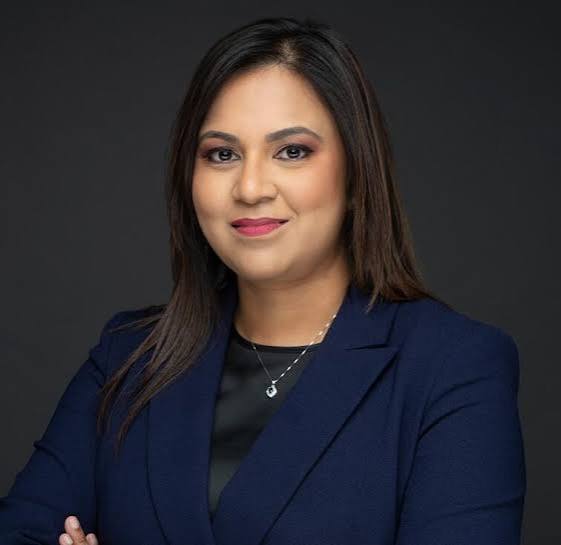
About the Author: Saira Lakhan is the Managing Partner of Magnus Attorneys-at-Law and a senior lawyer with over 15 years of experience representing a diverse clientele before the courts of Trinidad and Tobago and the UK Privy Council. Specialising in civil litigation, family law, and alternative dispute resolution, she holds an LLB from the University of the West Indies, an LEC from the Hugh Wooding Law School, and an MBA from Anglia Ruskin University. In addition to her extensive practice, Lakhan is a Certified Mediator and Arbitrator who currently serves as President of the Assembly of Southern Lawyers and sits on the Disciplinary Committee of the Law Association of Trinidad and Tobago.