
- New Strategy Launched: The Central Bank of Trinidad and Tobago (CBTT) has released its ‘Insight to Impact’ Strategic Plan for 2026/27 to 2030/31.
- Core Focus Areas: The plan is built upon three main themes: Monetary Stability, Financial Stability, and Internal Operations.
- Future-Ready Approach: Key priorities over the next five years include modernising payment systems, formally incorporating climate risks into supervisory frameworks, and prudently adopting Artificial Intelligence (AI) while managing cybersecurity threats.
The Central Bank of Trinidad and Tobago (CBTT) Monday released its latest Strategic Plan for the period 2026/27 to 2030/31, which it says sets a clear direction for fulfilling the bank’s mandate in an increasingly dynamic and complex environment.
The CBTT said that the plan, titled “Insight to Impact,” is centred around three themes, namely Monetary Stability, Financial Stability, and Internal Operations.
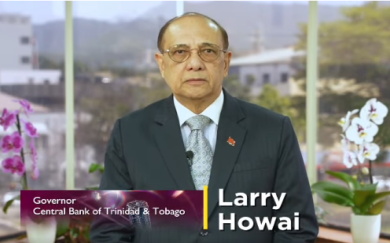
CBTT Governor Larry Howai said that the strategic plan “sets a clear direction for fulfilling our mandate in an increasingly dynamic and complex environment.” He added, “More than a roadmap, it embodies who we are as an institution, how we work, and the high standards we uphold as the guardians of Trinidad and Tobago’s monetary and financial stability.”
Howai said that this new strategic plan positions the bank as a modern authority, “agile in responding to change, empowered by technology and data, and disciplined in transforming sound analysis into meaningful results.”
“Guiding this next chapter is a new vision to be a premier, trusted, and innovative central bank committed to a resilient Trinidad and Tobago,” Howai said, adding that the theme “captures the essence of our journey, understanding emerging risks and opportunities, and acting decisively to deliver outcomes that strengthen our institution, the financial system, and the country we serve.”

Howai noted that the vision is also supported by eight strategic objectives and 23 projects and “provides a clear path for strengthening the way we manage the economy, safeguard the financial system, and enable the people, technology, and processes that drive our work.”
“We aim to build a more adaptive, future-ready central bank of Trinidad and Tobago,” he said.
According to the CBTT, while the global economy has largely adjusted to the immediate effects of the COVID-19 pandemic, many of its legacy impacts remain. It noted that public and private sector debt levels remain elevated in several economies, supply chains continue to be vulnerable to geopolitical disruptions, and inflationary pressures can re-emerge quickly in response to external shocks.
“At the global level, rising geopolitical fragmentation, strategic trade realignments, and increasing uncertainty surrounding energy markets are expected to remain prominent features of the international landscape throughout the planning period,” the bank stated.
“For Trinidad and Tobago, the economy continues to face both opportunities and challenges. Efforts to revitalise the energy sector, strengthen regional energy collaboration, and diversify sources of economic growth are underway,” the CBTT said, noting that “at the same time, persistent foreign exchange constraints, dependence on external energy markets, and the potential for imported inflation underscore the importance of maintaining sound monetary, financial stability, and reserve management policies.”
The bank said that rapid advances in financial technology are transforming payment systems, financial services, and customer expectations. Faster payments, digital finance, artificial intelligence (AI), cloud computing, and data-driven services are reshaping financial markets at a pace that often exceeds the capacity of traditional regulatory and operational frameworks. It noted that over the next five years, payments modernisation is expected to remain a major strategic priority.
“The continued development of faster domestic payments, regional cross-border payment arrangements, and modern payment services frameworks will require close collaboration between the Bank, financial institutions, Government, and regional partners.”
The CBTT also noted that traditional prudential risks continue to require close monitoring, while emerging risks relating to cybersecurity, climate change, digital finance and presence, AI, and concentration in third-party technology providers are increasing in significance.
“The Bank will therefore need to continue enhancing supervisory methodologies, strengthening crisis preparedness arrangements, expanding the use of technology-enabled supervision, and improving its capacity to identify, assess and respond to risks, in a timely manner, before they become systemic threats.”
It stated that climate change and its related concerns are now accepted as a significant risk to macro and financial stability and that, similar to its international peers, the CBTT has placed immediate focus on the “incorporation of climate considerations, more formally, into our supervisory framework, procurement, risk management, and operational resilience.”

The CBTT said that it will remain committed to its net-zero central banking pledge over the new five-year strategic plan through climate stewardship and advocacy on initiatives that focus on goals that would deliver sustainable finance and infrastructures that support the environment, economic sustainability, and payments resilience.
“While the Bank recognises that AI and a greater digital presence present sizeable opportunities, we note the following concerns: the adoption of AI without adequate governance, controls, and internal capacity; cybersecurity; the AI-cybersecurity nexus; and the narrow vendor supply chain for IT solutions.”
“In the new five-year strategic planning cycle, the Bank plans to prudentially optimise its use of AI and digital presence to efficiently conduct its central banking operations, while at the same time putting in place an appropriate guiding framework to address the previously mentioned concerns as they relate to both its own operations and the broader financial sector.”
It noted that the stakeholder consultations undertaken as part of the development of this Strategic Plan revealed broad agreement that the bank’s future effectiveness will depend not only on its policies and regulatory actions, but also on its ability to strengthen internal capabilities.
“The Bank’s ability to attract, develop, and retain specialised talent will be particularly important as emerging technologies, increasingly complex supervisory requirements, and evolving stakeholder expectations continue to place greater demands on the Bank.”
“Looking ahead, maintaining the continuity of institutional knowledge and leadership, strengthening and improving workforce planning, and improving execution discipline will remain important priorities throughout the strategic period and critical to our success.”